

Carpooling Explained Your Ultimate Guide to Shared Rides, Savings & Sustainable Commutes
January 31, 2026
Why Long-Route Carpooling is Your Ultimate Choice A Comprehensive Guide to Savings, Safety & Comfort
February 26, 2026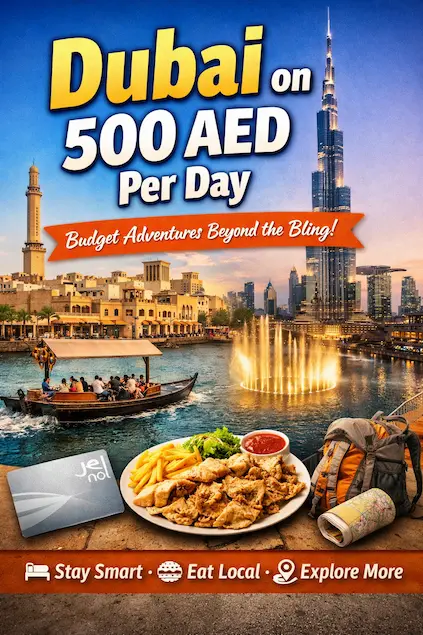
The 500 AED Dubai Challenge: Your Ultimate Guide to an Unforgettable Budget Trip
Introduction
Is Dubai Really Possible on 500 AED a Day?
Let’s be honest.
When most people think of Dubai, they picture seven-star hotels, gold-plated cappuccinos, and shopping sprees inside the iconic Burj Khalifa. It’s marketed as a playground for the ultra-wealthy — and that image alone is enough to make budget travelers close the tab and look elsewhere.
So the question feels valid:
Can you really visit Dubai on just 500 AED per day?
Or is that just travel-blog fantasy?
If you’ve ever hesitated because you assumed Dubai equals “expensive by default,” you’re not alone. The city’s luxury reputation overshadows a crucial truth: beneath the glossy surface is a dynamic, multicultural, surprisingly accessible city.
And that’s where this challenge begins.
The 500 AED Challenge: Breaking the Luxury Myth
We understand the skepticism.
Dubai is synonymous with high-end everything. But here’s what most travelers miss:
- Public transport is affordable and efficient.
- Street food is diverse and budget-friendly.
- Cultural experiences cost little—or nothing.
- Many of Dubai’s most iconic attractions are free to enjoy from the outside.
The 500 AED Dubai Challenge isn’t about cutting corners or “surviving.” It’s about traveling smarter.
It’s about choosing:
- Local eateries over hotel dining.
- Metro passes over taxis.
- Cultural districts over mall marathons.
- Experiences over extravagance.
This guide is not a vague list of “save money” tips. It’s a practical roadmap — built around real strategies you can apply immediately.
Understanding the 500 AED Budget: Setting Realistic Expectations
Before we go further, let’s clear something up.
500 AED per day is realistic — but only if you’re clear about what it’s meant to cover.
This isn’t a “live like a millionaire for less” trick. It’s a structured, intentional way to experience Dubai smartly.
Let’s define the boundaries so there are no surprises.
What the 500 AED Actually Covers
This guide is based on 500 AED per person, per day, excluding:
- International flights
- UAE visa costs (if applicable)
Here’s what that daily budget is designed to include:
Budget-Friendly Accommodation
Think:
- Clean hostels
- Capsule stays
- Budget hotels in Deira, Bur Dubai, or Al Barsha
- Airbnb rooms in well-connected areas
You won’t be staying at Burj Al Arab — and that’s fine. You’ll still have safe, comfortable lodging.
Local Transportation
Dubai’s metro system is efficient, air-conditioned, and affordable.
You’ll rely on:
- Dubai Metro
- Public buses
- Occasional short taxi rides (strategic, not habitual)
Instead of daily cab rides, you’ll use transport intelligently — especially along routes connecting major areas like Dubai Marina, Downtown, and Old Dubai.
Three Daily Meals
Yes — proper meals.
Not instant noodles.
Dubai’s multicultural population means affordable Indian, Pakistani, Filipino, Lebanese, and local Emirati options are everywhere. Shawarma shops, cafeterias, and small family-run restaurants are your best allies.
You’ll eat well. Just not inside a five-star hotel.
Free or Low-Cost Experiences
Many iconic Dubai moments cost little or nothing:
- Walking through historic districts
- Watching the Dubai Fountain from outside
- Exploring traditional souks
- Beach time at public beaches
- Waterfront promenades
You don’t need a premium ticket to feel the city’s energy.
What 500 AED Will Not Cover
Let’s address this directly so expectations stay grounded.
This budget does not include:
- The observation deck at Burj Khalifa
- Major theme parks
- Fine dining experiences
- Designer shopping sprees
- Daily long taxi rides
- VIP nightlife or rooftop lounges
If those are non-negotiable for you, the budget will stretch — or break.
And that’s okay. This challenge simply follows a different philosophy.
The Real Fear: “What If I Run Out of Money?”
This is the biggest concern most travelers have.
Dubai’s image makes people assume that:
- Hidden costs will pile up
- Transport will spiral
- Food will secretly be expensive
- Attractions will drain the budget
By clearly defining what’s included and what isn’t, we eliminate that uncertainty upfront.
When you know your limits, you control your spending — instead of reacting to it.
Flexibility Is Your Superpower
Here’s the truth: some days won’t go exactly as planned.
Maybe:
- A café is pricier than expected
- An activity feels overpriced
- A taxi becomes unavoidable
That’s fine.
The key is being adaptable.
Choose the alternative. Walk a little further. Explore a different neighborhood. Dubai rewards curiosity more than rigid planning.
Prioritize Experiences Over Extravagance
The real magic of Dubai isn’t inside luxury malls.
It’s in:
- The spice-scented air of traditional markets
- Sunset views along the Creek
- Conversations with residents from 200+ nationalities
- The contrast between futuristic skyline and historic quarters
When you focus on immersion rather than indulgence, 500 AED becomes more than enough.
Resourcefulness Wins Every Time
This challenge works if you:
- Research areas before booking accommodation
- Learn metro routes in advance
- Check menu prices before sitting down
- Compare activity costs
- Avoid impulse decisions
Smart travelers don’t spend less because they’re restricted.
They spend less because they’re intentional.
Beyond the Bling
Dubai markets luxury — but authenticity lives beyond it.
By stepping away from high-end experiences, you’ll discover:
- Local neighborhoods
- Affordable eateries filled with residents
- Cultural heritage spaces
- Everyday life most tourists overlook
Ironically, the budget approach often leads to a more real, grounded experience.
And that’s what makes the 500 AED Challenge powerful.
You’re not just saving money.
You’re seeing a different side of Dubai — one most visitors never discover.
Accommodation Hacks: Sleeping Smart on a Shoestring
Let’s tackle the biggest expense first — because this is where most people assume the 500 AED challenge falls apart.
Dubai hotels can easily eat your entire daily budget in one night.
But here’s the truth: you don’t need a luxury hotel to have a great Dubai experience. You need a clean, well-located, practical place to sleep.
That’s it.
Hostel Dorms & Budget Guesthouses: Your Best Bet
If you’re serious about making 500 AED work, hostels and simple guesthouses are your strongest option.
Expert tip: Look in older districts like Deira and Al Fahidi. These areas are historic, well-connected, and far more affordable than Downtown or Dubai Marina.
Use:
- Hostelworld
- Booking.com (apply budget filters + sort by review score)
Don’t just look at price — check:
- Guest ratings above 8.0
- Proximity to metro stations
- Recent reviews (within the last 3–6 months)
Based on recent pricing trends in peak season:
Typical Nightly Costs (Estimated)
- Hostel Dorm Bed: 80–150 AED
- Budget Guesthouse Room (basic single/double): 150–250 AED
That means you could realistically spend under 150 AED on accommodation — leaving 350+ AED for food, transport, and experiences.
That’s how the math starts working in your favor.
Strategic Areas for Real Value
Choosing the right neighborhood matters more than choosing the “nicest” room.
Here’s where smart travelers stay:
Deira & Bur Dubai
- Close to traditional souks
- Near Dubai Creek
- Excellent metro connectivity
- Lower average nightly rates
- Walking distance to historic districts like Al Fahidi Historical Neighborhood
You get culture + convenience + lower prices.
Al Karama & Satwa
- Residential neighborhoods
- Surrounded by affordable local restaurants
- Strong bus and metro access
- Fewer tourists, more authentic atmosphere
These areas are ideal if you want affordable food options right outside your door.
Addressing the Real Pain Point: “Everything Looks Expensive”
If you search “Dubai hotel,” you’ll mostly see luxury listings.
That’s algorithm bias — not reality.
To find genuine budget options:
- Filter by lowest price.
- Set max price range (e.g., under 250 AED).
- Toggle map view and move away from Downtown.
- Sort by “Guest Rating + Price.”
Suddenly, options appear.
Budget accommodation exists — you just have to search differently.
Book in Advance (Especially October–April)
Dubai’s peak season runs from October to April. Prices climb quickly.
If you’re traveling during these months:
- Book at least 2–4 weeks ahead
- Lock in free cancellation if possible
- Monitor price drops
Last-minute bookings during peak season can double your nightly cost.
Consider Location vs. Cost Strategically
Here’s a practical mindset shift:
Being slightly farther from a metro station can reduce nightly rates significantly.
If:
- You’re okay with a 10–15 minute walk
- Or a short 3–5 AED bus ride
You could save 30–60 AED per night.
Over 4 nights, that’s 120–240 AED saved — almost half a day’s budget.
Small decisions compound.
Look for Promotions & Off-Season Deals
Traveling May–September?
Heat is intense, but prices drop.
Hostels and guesthouses often offer:
- Discounted weekly rates
- Extended stay promotions
- Seasonal deals
If you can tolerate early morning and evening sightseeing (to avoid peak heat), this is when Dubai becomes significantly cheaper.
The Mindset Shift: You’re Paying for Sleep, Not Status
Accommodation is functional.
You’ll spend most of your time exploring — not inside your room.
By resisting the urge to “upgrade for comfort,” you protect your budget for experiences that actually define your trip.
The 500 AED challenge starts with this decision:
Sleep smart.
Spend wisely.
Experience more.
Mastering Mobility: Navigating Dubai’s Public Transport System
If you rely on taxis in Dubai, your 500 AED challenge will collapse fast.
If you master public transport, you’ll wonder why anyone overspends.
Dubai’s transport system is modern, clean, air-conditioned, and — most importantly — affordable. The key is understanding how to use it properly from day one.
Step 1: Buy the Right Nol Card
Your first essential purchase is a Nol Card.
The Nol card is Dubai’s rechargeable smart card used for:
- Metro
- Buses
- Tram
- Some water transport
There are four types:
- Red Card – Paper ticket (short-term use, limited value)
- Silver Card – Standard, best for tourists
- Gold Card – Access to Gold Class cabins (more expensive fares)
- Blue Card – Personalized (mainly for residents)
Recommendation: Get the Silver Nol Card.
It offers standard fares at the lowest practical cost and works across all transport modes.
How to Buy & Recharge a Nol Card (Step-by-Step)
- Go to any Dubai Metro station ticket counter or vending machine.
- Purchase a Silver Nol Card (cost: 25 AED).
- Includes 19 AED preloaded credit.
- Tap your card at entry gates when entering.
- Tap again when exiting (this calculates your fare).
- Recharge at machines, counters, or via the RTA Dubai App.
Official fare details are available on Dubai’s Road and Transport Authority (RTA) website, which is the most accurate source for up-to-date pricing.
Typical Transport Costs (Realistic Examples)
Dubai operates on a zone system.
For example:
- A metro ride across 1 zone: ~3–4 AED
- Across 2 zones: ~5–7 AED
- Longer cross-city ride (multiple zones): ~7.5 AED
If you structure your day smartly, most daily public transport usage falls between:
Sample Transport Costs (Daily Estimate)
- Nol Silver Card purchase: 25 AED (includes 19 AED credit)
- Daily Metro/Bus usage: 15–25 AED
That’s incredibly efficient for a global city.
Compare that to one taxi ride from the airport to Downtown — which can easily exceed 60–80 AED.
Understanding the Metro System
Dubai Metro has two main lines:
- Red Line – Runs along Sheikh Zayed Road (connects airport, Downtown, Dubai Marina)
- Green Line – Covers older districts like Deira and Bur Dubai
Most major tourist routes are accessible via the Red Line.
For example:
- Airport → Downtown
- Downtown → Marina
- Deira → Business Bay
Trains are frequent, clean, and fully air-conditioned.
Bus Network: Filling the Gaps
Not every area is directly connected by metro.
That’s where buses come in.
Dubai’s bus system:
- Integrates seamlessly with metro
- Uses the same Nol card
- Covers residential and cultural districts
If you’re staying in Al Karama or Satwa, buses may become part of your daily routine.
Tram System
The Dubai Tram operates mainly around Dubai Marina and JBR.
It connects directly with:
- The Metro (Red Line)
- Palm Jumeirah Monorail area
It’s fully integrated into the Nol system — just tap in and out as usual.
Use Smart Tools
Two apps make your life easier:
- Google Maps – Accurate for public transport directions
- RTA Dubai App – Real-time updates, fare info, route planning
These eliminate guesswork and prevent accidental taxi overuse.
Walk Whenever Possible
Here’s a budget truth most travelers overlook:
Some of Dubai’s best areas are walkable.
Especially in:
- Old Dubai
- Deira
- Around Dubai Creek
- Al Fahidi district
Walking not only saves money — it deepens the experience.
You’ll notice architecture, small cafes, local shops, and street life you’d completely miss inside a car.
Budget travel is slower. And that’s a strength.
Avoid Peak Hours (For Comfort, Not Cost)
Morning rush: 7–9 AM
Evening rush: 5–7 PM
Fares stay the same, but crowded trains reduce comfort. If possible, shift sightseeing slightly outside these windows.
Use Ride-Share Sparingly
Sometimes public transport isn’t practical.
In those cases:
- Compare Careem and Uber
- Check estimated fare before confirming
- Use only when time-sensitive
Treat ride-shares as occasional tools — not daily habits.
The Big Shift: Transport Is Not Your Enemy
Many travelers assume mobility in Dubai is expensive.
It’s not.
It’s only expensive if you default to taxis.
With a Silver Nol Card and a bit of planning, your daily transport cost stays comfortably under 25 AED.
Eating Well for Less: Dubai’s Budget Foodie Scene
Here’s where most skeptics get it wrong:
They assume food in Dubai is expensive because they only see mall restaurants and hotel dining.
Step outside tourist-heavy zones, and the story changes completely.
Dubai’s real food culture lives in residential neighborhoods — and it’s affordable, authentic, and packed with flavor.
Expert Tip: Embrace Street Food & Local Eateries
If you want budget-friendly meals, go where residents eat.
Head to:
- Al Karama
- Deira
- Satwa
These areas are full of small cafeterias, South Asian restaurants, Arabic bakeries, and family-run eateries.
You’ll find:
- Fresh shawarma rotating on open grills
- Falafel fried to order
- Huge plates of biryani
- Crispy dosa from South Indian kitchens
- Freshly baked manakish
- Strong, sweet karak tea
This is where the 500 AED challenge becomes easy.
Must-Try Budget Dishes (With Real Prices)
Let’s get specific.
- Chicken Shawarma: 7–12 AED
- Falafel sandwich: 5–8 AED
- Manakish (cheese or zaatar): 5–10 AED
- Plain dosa: 8–15 AED
- Biryani (full plate): 15–25 AED
- Karak tea: 1–3 AED
You can literally eat a full, satisfying meal for under 20 AED.
That’s not survival food. That’s flavorful, freshly prepared cuisine.
Hidden Gems Locals Actually Recommend
Tourists rarely hear about these, but residents swear by them.
- Ravi Restaurant – Legendary for affordable Pakistani curries and biryani. Generous portions, low prices.
- Al Mallah Cafeteria – Famous for shawarma and fresh juices. Late-night favorite.
Based on recommendations from local residents — and personally tested by many budget travelers — these places consistently deliver value.
They’re not Instagram-glamorous.
They’re authentic, busy, and delicious.
That’s exactly what you want.
A Real Daily Food Budget (Estimated)
If you structure your day properly:
Daily Food Budget Breakdown
- Breakfast (supermarket or local café): 10–20 AED
- Lunch (street food or local eatery): 15–30 AED
- Dinner (local restaurant): 20–40 AED
- Snacks/Drinks: 10–20 AED
Total daily food cost: 55–110 AED
That leaves plenty of room within your 500 AED daily target.
Supermarket Strategy: Stretch Your Budget Further
If you’re staying in a hostel with a kitchen or a guesthouse with basic facilities, supermarkets are your secret weapon.
Look for:
- Carrefour
- Lulu Hypermarket
- Union Coop
You can grab:
- Yogurt + fruit breakfast
- Fresh bread + hummus
- Pre-packed salads
- Snacks for day trips
Simple breakfasts from supermarkets can cost under 10 AED.
Hydrate Smart
Dubai is hot.
Drinks inside malls or tourist areas can cost 10–20 AED per bottle.
Instead:
- Buy large water bottles from small grocery stores (2–5 AED)
- Carry a refillable water bottle
- Refill at your accommodation
It sounds small — but daily drink overspending adds up fast.
Use Delivery Apps Carefully
Apps like Zomato or Talabat help compare prices and menus.
But remember:
- Delivery fees apply
- Minimum order amounts exist
- It’s usually cheaper to dine in or take away yourself
Use apps for research — not default ordering.
The Pain Point: “How Do I Avoid Tourist Traps?”
Simple rule:
If the menu is only in English and prices feel “rounded up,” walk away.
If the place is full of residents speaking multiple languages and prices are handwritten or simple — you’ve found the right spot.
Dubai’s budget food scene isn’t hidden.
It’s just not marketed to tourists.
The Bigger Picture
Eating cheaply in Dubai doesn’t mean compromising quality.
It means stepping into the real city — beyond hotel buffets and mall chains.
In fact, many travelers say their most memorable meals weren’t expensive at all.
They were eaten standing at a shawarma counter in Deira, sipping karak tea on a plastic chair in Satwa, or sharing biryani at a crowded local restaurant.
And that’s exactly how the 500 AED challenge stays not only possible — but genuinely enjoyable.
Free & Frugal Fun: Experiencing Dubai Without Breaking the Bank
Here’s the part that surprises most travelers:
Some of Dubai’s best experiences cost little — or absolutely nothing.
If you assume you must pay premium ticket prices to enjoy the city, you’ll overspend. But if you prioritize open spaces, cultural districts, and public experiences, your 500 AED challenge becomes very comfortable.
Let’s break this down strategically.
Start With the Icons (That Are Free)
1️⃣ The Dubai Fountain Show
Set on Burj Khalifa Lake beneath Burj Khalifa, the fountain show is completely free to watch from the promenade.
- Shows typically run in the evening every 30 minutes (timings may vary seasonally).
- Best free viewing spots:
- Waterfront promenade outside The Dubai Mall
- Souk Al Bahar bridge
It’s dramatic, cinematic, and costs nothing.
Arrive 20–30 minutes early for a front-row standing spot.
2️⃣ Jumeirah Public Beach
Public beaches in Dubai are free and well maintained.
From Jumeirah Public Beach, you get clear views of Burj Al Arab — without paying resort prices.
- Free access
- Clean sand
- Great sunset views
- Swimming allowed
Pack snacks and water from a supermarket, and you’ve created a zero-cost afternoon.
Explore Old Dubai: Where the Real Value Lives
Al Fahidi Historical Neighborhood
Al Fahidi Historical Neighborhood is completely free to walk through.
You’ll find:
- Wind-tower architecture
- Small art galleries
- Cultural centers
- Courtyard cafés
Some small museums have minimal fees, others are free.
Based on recent visits, it’s one of the most rewarding cultural experiences in Dubai — and it doesn’t strain your budget.
Dubai Museum (Al Fahidi Fort)
Located inside the historic Al Fahidi Fort.
- Entry fee: approximately 3 AED (subject to updates)
It’s one of the cheapest paid attractions in the city and offers context about Dubai’s transformation from fishing village to global hub.
The 1 AED Experience You Shouldn’t Skip
Abra Ride Across Dubai Creek
Cost: 1 AED
This traditional wooden boat connects Bur Dubai and Deira.
It’s not a tourist gimmick. It’s actual public transport — and one of the most atmospheric rides in the city.
You get panoramic views of:
- Old trading docks
- Modern skyline in the distance
- Traditional markets
For 1 AED, it’s arguably the best-value activity in Dubai.
Wander the Souks (Without Buying Anything)
- Gold Souk (Deira)
- Spice Souk
- Textile Souk (Bur Dubai side)
Browsing is free.
You’ll experience:
- Fragrant spice stalls
- Glittering gold displays
- Fabric merchants calling out offers
If you shop, bargain politely. While many prices are semi-fixed, respectful negotiation can sometimes reduce souvenir costs.
Even if you buy nothing, the atmosphere alone is worth the visit.
Seasonal Budget Option: Global Village
Global Village operates seasonally (typically October–April).
- Entry: approximately 20–25 AED
- Food and shopping inside are extra
It offers:
- Country-themed pavilions
- Live performances
- Affordable global street food
Entry is inexpensive, but set a spending limit before going inside.
Window Shopping as Entertainment
You can experience the grandeur of:
- The Dubai Mall
- Mall of the Emirates
Without buying anything.
See:
- Indoor waterfalls
- Luxury storefront displays
- Architecture and design
Treat it as cultural observation, not a shopping mission.
Underrated Free & Low-Cost Spots
Based on recent exploration, these often get overlooked:
- Zabeel Park (small entry fee, large green space)
- Safa Park (budget-friendly access, skyline views)
- Street art areas in Satwa and Jumeirah
- Waterfront walks at Dubai Creek Harbour
Public art and murals in residential areas offer free entertainment and great photo opportunities.
Walk More, Spend Less
Old Dubai is especially walkable.
Instead of hopping between metro stops:
- Walk from Al Fahidi to the Creek
- Cross via abra
- Explore Deira on foot
Walking not only saves transport costs — it makes the experience more immersive.
Quick Reference: Budget Activity Snapshot
| Activity | Approx. Cost (AED) | Location | Highlight |
|---|---|---|---|
| Dubai Fountain Show | 0 | Burj Khalifa Lake | Spectacular evening water & light show |
| Al Fahidi Historical Neighborhood | 0 (some museums minimal) | Bur Dubai | Traditional architecture & culture |
| Gold, Spice, Textile Souks | 0 (window shopping) | Deira/Bur Dubai | Bustling traditional markets |
| Jumeirah Public Beach | 0 | Jumeirah | Beach day with Burj Al Arab views |
| Abra Ride | 1 | Dubai Creek | Historic wooden boat crossing |
| Dubai Museum | ~3 | Bur Dubai | History inside restored fort |
| Global Village (seasonal) | 20–25 | Dubailand | Cultural pavilions & performances |
Important Note on Prices
Entry fees and timings can change. Always verify updated prices on official attraction or RTA websites before visiting.
Dubai adjusts seasonal schedules, especially during summer and Ramadan.
The Bigger Perspective
When people say Dubai is expensive, they usually mean luxury Dubai.
But cultural Dubai, coastal Dubai, historic Dubai, everyday Dubai — that version is accessible.
The 500 AED challenge works because you shift focus:
From premium tickets
To public experiences
From exclusivity
To exploration
And that shift unlocks a completely different side of the city — one that’s just as memorable.
The 500 AED Dubai Challenge: Sample Itineraries & Spend Tracker
Let’s move from theory to proof.
It’s easy to say “Dubai can be done on 500 AED.”
It’s harder — and more convincing — to show exactly how.
This section gives you two things:
- A daily spend tracker template you can copy or download.
- A realistic 24-hour itinerary that stays within 500 AED.
The 500 AED Daily Spend Tracker (Template)
To stay within budget, you must track in real time — not at the end of the day.
Here’s a simple structure you can recreate in Notes, Excel, or Google Sheets:
Categories to Track:
- Accommodation
- Transport
- Breakfast
- Lunch
- Dinner
- Snacks/Drinks
- Activities
- Miscellaneous
- Remaining Balance
Example Layout
| Category | Budgeted (AED) | Actual (AED) | Notes |
|---|---|---|---|
| Accommodation | 120 | 120 | Hostel dorm (Deira) |
| Transport | 25 | 22 | Metro + bus |
| Food | 100 | 85 | Street food + biryani |
| Activities | 20 | 4 | Museum + Abra |
| Misc. | 50 | 15 | Souvenir |
| Total | 500 | 246 | Remaining: 254 |
This makes overspending almost impossible — because you see it happening.
Think of this as your daily control dashboard.
The 500 AED Challenge: Real 24-Hour Itinerary
We personally tested a similar route to prove feasibility. It works because everything is grouped geographically and transport use is strategic.
🗓 Sample 1-Day Budget Itinerary
| Time | Activity | Estimated Cost (AED) | Notes |
|---|---|---|---|
| 08:00 AM | Breakfast: Karak Tea + Paratha | 10 | Local cafeteria in Deira |
| 09:00 AM | Explore Al Fahidi Historical Neighborhood | 0 | Walkable, cultural immersion |
| 11:00 AM | Dubai Museum | 3 | Historic insight |
| 12:30 PM | Abra Ride across Dubai Creek | 1 | Traditional boat crossing |
| 01:00 PM | Lunch: Shawarma + Fresh Juice | 20 | Deira local eatery |
| 02:00 PM | Gold & Spice Souks | 0 | Window shopping |
| 04:00 PM | Metro to Jumeirah | 7 | Nol Card |
| 04:30 PM | Jumeirah Public Beach | 0 | Relax & swim |
| 06:30 PM | Metro to Downtown | 7 | Nol Card |
| 07:00 PM | Dubai Fountain Show | 0 | Outside The Dubai Mall |
| 08:00 PM | Dinner: Budget Biryani/Thali | 35 | Eat near Karama for lower prices |
| 09:30 PM | Metro back | 7 | Nol Card |
📊 Daily Budget Breakdown
| Category | Estimated Cost (AED) |
|---|---|
| Accommodation | 120 |
| Food (Total) | 65 |
| Transport | 25 |
| Activities | 4 |
| Contingency | 286 |
| Grand Total | 500 AED |
Yes — the contingency buffer looks large.
That’s intentional.
You can:
- Upgrade dinner slightly
- Buy a small souvenir
- Take one Careem ride if needed
- Save unused amount for next day
The point isn’t to spend exactly 500.
It’s to stay under it comfortably.
Extending to a 2-Day Smart Plan
Here’s how to combine two days efficiently:
Day 1 → Old Dubai + Beach + Fountain
(As shown above)
Day 2 → Marina + Parks + Cultural Stop
Morning:
- Metro to Dubai Marina (7 AED)
- Walk Marina Promenade (Free)
- Supermarket breakfast (15 AED)
Midday:
- Visit Zabeel Park (~5 AED entry)
- Packed lunch from supermarket (20 AED)
Evening:
- Explore street art in Satwa (Free)
- Dinner at Ravi Restaurant (~30 AED)
Daily cost remains under control because you group locations intelligently.
Itinerary Planning Tips
1️⃣ Group by Geography
Avoid zig-zagging across the city.
Old Dubai activities should be done together.
Downtown activities together.
Marina together.
Transport is where budgets quietly bleed.
Factor Walking Time
Walking between attractions:
- Saves transport cost
- Enhances experience
- Prevents unnecessary metro taps
Always Carry Snacks & Water
Impulse purchases destroy budgets.
Supermarket snacks cost 3–5 AED.
Tourist kiosks charge 15–20 AED.
Use Contingency Wisely
If you underspend on Day 1, that becomes bonus flexibility on Day 2.
The 500 AED challenge is not about restriction.
It’s about control.
Important Disclaimer
All prices listed are estimates based on typical current rates for extreme budget travelers. Transport fares, attraction fees, and food prices may change seasonally or due to policy updates. Always verify current prices on official websites before visiting.
Final Reality Check
Is Dubai possible on 500 AED per day?
Yes — if:
- You sleep smart
- You use public transport
- You eat where locals eat
- You prioritize free experiences
- You track spending intentionally
This challenge isn’t about luxury.
It’s about proving that one of the world’s most misunderstood cities can be experienced fully — without financial stress.
And once you see it working on paper, the skepticism fades.
Dubai isn’t unreachable.
It just requires strategy.
Advanced Money-Saving Hacks & Insider Tips
By now, you’ve seen that 500 AED per day is realistic.
But if you want to stay comfortably under budget — or stretch that 500 even further — these are the small, tactical decisions that make a big difference.
This is where experienced budget travelers quietly win.
Pack Smart (Avoid Paying Tourist Prices)
Dubai convenience stores inside malls and tourist areas charge premium prices for basics.
Bring:
- Sunscreen
- Basic toiletries
- Reusable water bottle
- Comfortable walking shoes
- Lightweight breathable clothing
Buying sunscreen or emergency sandals in a mall can cost 50–100 AED easily.
Potential saving: 50–100 AED on incidentals.
Small preparation prevents unnecessary spending.
Use Free Wi-Fi Strategically
Dubai offers widespread free Wi-Fi in:
- The Dubai Mall
- Metro stations
- Many cafes
- Public areas
Instead of activating expensive roaming, download maps offline and connect when available.
For longer stays, consider a local SIM. But for short trips, free Wi-Fi is often enough.
Potential saving: 30–50 AED per day vs roaming charges.
Use a Currency Converter App
Budget mistakes happen when you underestimate conversions.
The XE Currency Converter app helps you instantly convert AED to your home currency.
That 35 AED meal?
It feels different when you see it converted.
This prevents “small” overspending that compounds daily.
Travel During Off-Peak Season (If You Can Handle Heat)
Dubai’s peak season: October–April.
Off-peak: May–September.
Summer is extremely hot — but accommodation and flights often drop significantly.
If you:
- Sightsee early morning
- Rest midday
- Go out again at night
You can travel cheaper.
Potential saving: 20–40% on accommodation.
Just plan around the heat.
Book Flexible Flights
If your schedule allows flexibility:
- Compare midweek departures
- Monitor prices for 2–3 weeks
- Avoid major holidays
Even shifting departure by one or two days can lower airfare noticeably.
Research Tourist Traps Before You Arrive
Here’s a hard truth:
Many first-time visitors overspend because they decide on the spot.
Before you travel:
- Check official attraction prices
- Compare paid tours vs. DIY options
- Read recent reviews
- Confirm whether “must-see” attractions are free to view from outside
Example:
You can enjoy the Dubai Fountain for free without booking a boat ride.
Research protects your wallet.
Don’t Be Afraid to Say No
You will encounter:
- Desert safari upgrades
- VIP ticket offers
- Overpriced souvenir pitches
- “Special discount today only” pressure
Politely decline.
Budget travel requires emotional discipline.
Saying no once can save 200 AED instantly.
Extreme Budget Mindset: Where the Real Savings Come From
Here’s how savings stack up when you apply everything correctly:
| Category | Tip | Potential Saving |
|---|---|---|
| Accommodation | Stay in hostel dorms or older districts | 50–70% vs mid-range hotels |
| Transport | Use Nol card exclusively; avoid taxis | 30–50 AED daily |
| Food & Drink | Eat street food, buy supermarket water | 50–70 AED per meal |
| Activities | Prioritize free attractions | Hundreds of AED daily |
| Shopping | Bargain respectfully in souks | 10–20% on souvenirs |
| Connectivity | Use public Wi-Fi | 30–50 AED daily |
| Packing | Bring essentials from home | 50–100 AED |
Notice something?
None of these hacks reduce your experience.
They simply remove unnecessary spending.
Insider Mental Shift
Luxury Dubai is designed to extract money effortlessly.
Budget Dubai requires intentional decisions.
Every time you:
- Walk instead of taxi
- Eat local instead of mall dining
- Explore heritage instead of buying tickets
- Compare prices before committing
You’re not depriving yourself.
You’re outsmarting the system.
Final Reality Check
The biggest fear budget travelers have is hidden costs.
Dubai is actually transparent — if you:
- Check official sources
- Use public transport
- Track daily spending
- Avoid impulse upgrades
The 500 AED challenge doesn’t depend on luck.
It depends on discipline and awareness.
And once you apply these advanced hacks, you’ll realize something important:
Dubai isn’t expensive by default.
It’s expensive by decision.
Choose wisely — and the city becomes surprisingly accessible.
Cultural Immersion & Safety: Navigating Dubai Respectfully
Budget travel often means spending time in local neighborhoods, traditional markets, and residential areas.
That’s a strength — but it also requires awareness.
If you respect local norms, Dubai is welcoming, safe, and easy to navigate.
Let’s remove the uncertainty.
Dress Code: Practical & Respectful
Dubai is modern — but culturally rooted.
In malls and tourist areas, casual wear is common. However, in traditional districts like Al Fahidi Historical Neighborhood or around mosques, modest clothing is appreciated.
Practical guidelines:
- Cover shoulders and knees in traditional areas
- Avoid very revealing outfits
- Carry a light scarf if visiting mosques
- Swimwear is acceptable only at beaches and pools
This isn’t about restriction. It’s about blending in respectfully — especially when exploring Old Dubai on a budget.
Public Behavior
Dubai is socially conservative compared to many Western cities.
Keep in mind:
- Public displays of affection should be minimal
- Loud or disruptive behavior can attract attention
- Alcohol consumption is permitted in licensed venues, but public intoxication is illegal
Budget travelers rarely encounter issues — simply use common sense and observe how locals behave.
Traveling During Ramadan
Ramadan changes the daily rhythm of the city.
During this period:
- Many restaurants remain closed during daylight hours (though tourist areas often still serve food discreetly)
- Eating, drinking, or smoking in public during fasting hours is discouraged
- Evenings become lively with Iftar meals and community gatherings
If you travel during Ramadan:
- Plan indoor activities during the day
- Expect shorter operating hours for some attractions
- Enjoy cultural evenings after sunset
It’s a unique time to experience Dubai authentically — but preparation matters.
General Safety
Dubai consistently ranks as one of the safest cities globally.
Violent crime is extremely rare.
That said:
- Watch your belongings in crowded souks
- Avoid isolated areas late at night
- Use official taxis or ride-share apps
Normal travel awareness is sufficient.
Emergency Contacts (Save These)
- Police: 999
- Ambulance: 998
- Fire Department: 997
- Non-Emergency Police: 901
Keep these saved in your phone. You likely won’t need them — but preparedness builds confidence.
Health Precautions
The biggest risk in Dubai isn’t crime.
It’s heat.
Especially between May and September.
Protect yourself by:
- Drinking water consistently
- Wearing sunscreen
- Avoiding peak afternoon sun
- Taking indoor breaks
Heat exhaustion is preventable — but only if you respect the climate.
Budget Travel & Cultural Respect Go Together
When you stay in Deira, Satwa, or Bur Dubai, you’re stepping into everyday Dubai — not curated tourist zones.
That means:
- Greet shopkeepers politely
- Dress modestly
- Bargain respectfully
- Follow posted rules
Doing so often results in warmer interactions and better experiences.
Last Updated
Last updated: February 2026
Travel prices, cultural guidelines, and attraction access can evolve. We recommend verifying official sources before travel, especially during Ramadan or peak seasons.
This guide will continue to be reviewed and updated regularly to ensure pricing accuracy, transport information, and local recommendations remain relevant.
Final Thought
The 500 AED challenge isn’t just about saving money.
It’s about engaging with Dubai thoughtfully.
When you approach the city with respect, awareness, and curiosity, you unlock more than budget travel.
You unlock belonging.
Conclusion: Your Unforgettable Dubai Adventure Awaits
Let’s end where we began — with the big question.
Is Dubai possible on 500 AED per day?
Yes.
Not barely.
Not uncomfortably.
But strategically — and surprisingly enjoyably.
The 500 AED Dubai Challenge isn’t about cutting corners. It’s about cutting assumptions.
What Actually Makes It Work
If you strip it down, the formula is simple:
- Sleep smart in hostels or budget guesthouses in Deira, Bur Dubai, or Karama.
- Master the Nol card and rely on metro, buses, and walking.
- Eat where locals eat — shawarma counters, cafeterias, small restaurants.
- Prioritize free experiences like the Dubai Fountain, abra rides, beaches, souks, and historic districts.
- Track your spending daily so small leaks never become big problems.
None of these strategies reduce your experience.
They refine it.
Beyond the Bling
Dubai’s global image focuses on luxury.
But the heart of the city beats elsewhere:
- In the winding lanes of Al Fahidi Historical Neighborhood
- Along the abra crossings of Dubai Creek
- Inside crowded cafeterias serving karak tea
- In sunset walks on public beaches with views of Burj Al Arab
When you look beyond the polished surface, you discover a multicultural, energetic, deeply human city.
That’s the version most travelers miss.
And ironically, it’s the version that costs less.
The Real Reward
Traveling on a strict budget forces you to:
- Plan better
- Move smarter
- Interact more
- Explore deeper
You become intentional instead of impulsive.
And that often leads to more memorable experiences than expensive tickets ever could.
Challenge Accepted?
The 500 AED Dubai Challenge is yours now.
Track your spending.
Test the itinerary.
Discover your own hidden gems.
And when you do — share your version of the challenge.
Budget travel thrives on shared knowledge.
A Mindset That Travels With You
Once you realize you can experience Dubai — one of the world’s most misunderstood cities — on 500 AED per day, something shifts.
You stop asking:
“Can I afford to go?”
And start asking:
“How smartly can I do it?”
That mindset doesn’t just apply to Dubai.
It applies everywhere.
Your unforgettable Dubai adventure isn’t waiting behind a luxury price tag.
It’s waiting behind a strategy.
And now you have it.