

Dubai on 500 AED per day
February 26, 2026
Dubai Taxis vs. Car Lifts The Ultimate Guide to Costs, Legality, Safety & Convenience Explained
February 26, 2026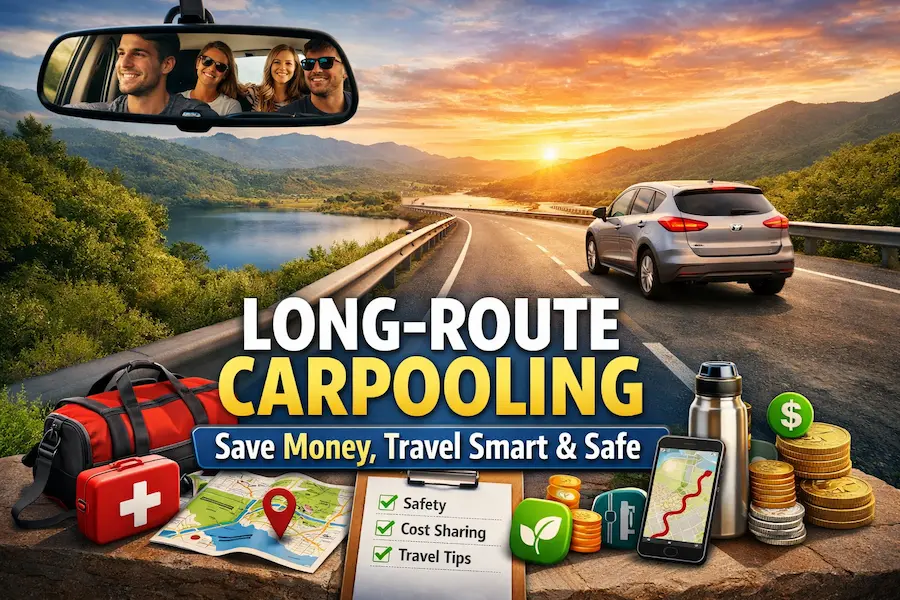
Introduction: The Case for Long-Route Carpooling
Long-distance driving isn’t what it used to be. Fuel prices continue to climb. Tolls add up. Vehicle wear and tear quietly drains your wallet. And after a few hours behind the wheel, the fatigue sets in — stiff shoulders, heavy eyes, and the mental strain of staying alert mile after mile.
Then there’s the environmental side of it. Driving hundreds of miles alone in a single-occupancy vehicle can feel wasteful, especially when climate concerns are more pressing than ever. Add to that the monotony of long stretches of highway — no conversation, no shared music, no one to split the driving — and the journey becomes more exhausting than enjoyable.
Problem: Long-distance travel is becoming increasingly expensive, environmentally taxing, and mentally draining.
Agitate: Solo drives amplify every downside. You carry the full cost burden. You shoulder all the driving fatigue. You experience the entire trip alone. Over time, that combination can make even necessary travel feel stressful and discouraging.
Solution: Long-route carpooling offers a smarter alternative.
Instead of battling rising costs and road fatigue alone, you share the journey — and the benefits. Long-route carpooling transforms extended drives into collaborative experiences. You split fuel expenses. You reduce your carbon footprint. You ease the mental load by sharing driving responsibilities. And perhaps most surprisingly, you turn travel time into meaningful social time.
Beyond the obvious financial and environmental advantages, carpooling introduces something often overlooked in travel discussions: companionship. A long journey becomes lighter when there’s conversation, shared playlists, and the simple comfort of not being alone on the road.
What You’ll Gain from This Guide
By the end of this guide, you’ll understand how to:
- Save significantly on long-distance travel costs
- Reduce your environmental impact
- Minimize driving fatigue and stress
- Travel more safely and confidently
- Turn long drives into enjoyable, social experiences
If you’ve been viewing long-distance travel as a necessary burden, it’s time to reconsider. With the right approach, it can become one of the most cost-effective, sustainable, and even rewarding ways to move between cities.
Understanding Long-Route Carpooling
What Defines “Long-Route” Carpooling?
Not all carpooling is the same.
Daily commuting carpooling typically involves short, repetitive trips — colleagues sharing a ride to the office or neighbors traveling the same 10–20 mile route each morning. Long-route carpooling, on the other hand, is designed for extended travel.
A “long-route” journey generally includes:
- Inter-city travel
- Inter-state trips
- Distances exceeding 100–150 miles
- Travel times of 2+ hours
These trips are less about routine convenience and more about strategic travel planning. Because of the greater distance, the benefits — financial, environmental, and psychological — are amplified.
Common Long-Route Carpooling Scenarios
Long-route carpooling works across a wide range of travel needs. Here are some common examples:
1. University Students Traveling Home
Students frequently travel between campus and home during semester breaks or holidays. Sharing a ride reduces travel expenses significantly and offers parents peace of mind knowing their child isn’t driving alone for hours.
2. Professionals Traveling Between Offices
Many companies operate across multiple cities. Employees traveling between branch offices can split costs while reducing fatigue — arriving more focused and productive.
3. Road Trippers
Friends or even newly connected travelers heading to the same destination can divide fuel costs, take turns driving, and enhance the overall experience with shared memories.
4. Digital Nomads & Remote Workers
This is where long-route carpooling becomes especially powerful.
Digital nomads and remote workers often relocate temporarily between cities to explore new environments. Carpooling allows them to:
- Reduce relocation costs
- Travel flexibly without the expense of flights
- Meet like-minded travelers
- Maintain mobility while staying budget-conscious
For remote professionals who value both freedom and financial efficiency, long-route carpooling aligns perfectly with a flexible lifestyle.
Key Benefits of Carpooling for Long Routes
Long-distance travel becomes far more manageable — financially, physically, and emotionally — when you stop doing it alone. Below, we break down the core advantages of long-route carpooling and how each one directly improves your travel experience.
Significant Financial Savings
Problem
Long-distance solo driving is expensive. Fuel, tolls, vehicle maintenance, and parking fees quietly compound into a significant travel bill.
Agitate
When you travel alone, you absorb 100% of those costs. Over multiple trips per year, this can translate into hundreds — even thousands — of dollars in avoidable expenses.
Solution
Carpooling distributes those costs fairly among riders, making long journeys dramatically more affordable.
1. Fuel Cost Reduction
Fuel is often the largest single expense on long routes. Splitting fuel costs between two, three, or four travelers can cut your individual expense by 50–75%.
For example:
- A 300-mile trip costing $90 in fuel
- Split between 3 passengers = $30 per person
That difference adds up quickly, especially for students, remote workers, and frequent inter-city travelers.
2. Toll Sharing
Toll roads can significantly increase travel costs, particularly on inter-state routes. In a solo trip, you absorb every toll booth charge. In a carpool, those fees are divided evenly, reducing the individual burden without sacrificing route efficiency.
3. Reduced Vehicle Wear and Tear
Long-distance mileage accelerates:
- Tire wear
- Oil consumption
- Brake usage
- Overall depreciation
When carpooling:
- Mileage is shared across vehicles (if alternating drivers on different trips), or
- You reduce how often you use your personal vehicle for long hauls
Over time, this lowers maintenance costs and preserves your car’s value.
4. Parking Fee Mitigation
If your destination requires paid parking — airports, downtown areas, events, or long-term stays — sharing those fees further reduces the total cost per person.
Differentiation Opportunity: Interactive Cost Savings Calculator
A powerful addition to any carpooling platform would be an Interactive Cost Savings Calculator.
Users could input:
- Trip distance
- Fuel cost per gallon
- Estimated tolls
- Number of passengers
The calculator would instantly display:
- Solo trip cost
- Carpool trip cost
- Total savings
Visualizing the numbers makes the benefits tangible and reinforces the financial logic behind carpooling.
Positive Environmental Impact
Reduced Carbon Emissions
Transportation accounts for a significant share of global carbon emissions. According to data from the U.S. Environmental Protection Agency, passenger vehicles are one of the largest contributors to greenhouse gas emissions in the United States.
Fewer cars on the road = fewer total emissions.
When three people share one vehicle instead of driving three separate cars:
- Fuel consumption per person decreases
- Total emissions are significantly reduced
Similarly, the International Energy Agency consistently reports that vehicle occupancy rates directly influence transport-related emissions.
Even small behavioral shifts — like choosing to carpool for long routes — create measurable environmental impact when adopted at scale.
Decreased Traffic Congestion
Beyond emissions, fewer vehicles on highways mean:
- Smoother traffic flow
- Shorter travel times
- Reduced accident risks
By carpooling, you’re not only benefiting yourself — you’re contributing to a more efficient road system overall.
Reduced Stress and Driving Fatigue
Problem
Long hours of uninterrupted driving demand sustained focus. Fatigue reduces reaction time and increases safety risks.
Agitate
When you’re the sole driver:
You manage navigation
You monitor road conditions
You maintain constant alertness
You absorb all responsibility
Mental exhaustion can set in before you realize it.
Solution
Carpooling allows for shared responsibility.
Shared Driving Responsibilities
If multiple drivers are licensed and insured, rotating drivers significantly improves safety and comfort.
Expert Tip:
On trips longer than 2–3 hours, plan structured driver rotations. Even a 45-minute break can restore concentration and reduce fatigue-related risk.
Mental Break
Even when not rotating drivers, simply having passengers:
- Assists with navigation
- Monitors traffic alerts
- Engages in conversation to keep drivers alert
The psychological load is lighter when it’s shared.
Social Opportunities & Connection
Carpooling is often viewed purely as a cost-saving tool — but its social value is equally powerful.
Meeting New People
Long-route carpooling creates natural opportunities to:
- Expand your network
- Connect with like-minded travelers
- Build professional or social relationships
Students, professionals, and digital nomads often find unexpected value in the conversations that happen between cities.
Shared Experiences
A long drive transforms into:
- Shared playlists
- Roadside food stops
- Inside jokes
- Collective problem-solving
These experiences often become memorable stories — not just transportation memories.
Combating Loneliness
Hours alone on the highway can feel isolating. Carpooling turns that solitude into interaction, engagement, and shared presence.
The “Adventure & Connection” Angle
Long-route carpooling isn’t just transportation — it’s an experience.
Instead of viewing travel as a logistical burden, you can frame it as:
- A micro-adventure
- A chance encounter
- A shared journey
This perspective shift makes the trip itself valuable, not just the destination.
Convenience and Flexibility
Door-to-Door Travel
Unlike many public transportation options, carpooling often provides:
- More direct routes
- Fewer transfers
- Reduced waiting times
You typically travel closer to your starting point and final destination without navigating complex transit systems.
Customizable Schedules
Carpool platforms allow travelers to:
- Choose departure times
- Select routes that align with personal needs
- Coordinate stops
This flexibility is especially useful for remote workers, freelancers, and students with variable schedules.
Access to Remote Areas
Many rural or semi-urban destinations lack reliable public transit. Carpooling bridges that gap, offering practical mobility without requiring every traveler to drive independently.
Carpooling vs. Solo Commute for Long Routes
When evaluating your travel options, a side-by-side comparison makes the decision clearer. Below is a practical, at-a-glance breakdown of how long-route carpooling compares to driving alone.
Important context: Carpooling cost savings vary depending on distance, fuel prices, toll rates, and the number of passengers. The more evenly expenses are shared, the greater the individual savings.
Long-Route Travel Comparison
| Feature | Carpooling for Long Routes | Solo Driving for Long Routes |
|---|---|---|
| Cost (Fuel, Tolls, Wear) | Significantly reduced (shared among passengers); drivers can save 50–75% on fuel and tolls depending on occupancy. Passengers pay a predictable fixed share. | High (100% responsibility for fuel, tolls, maintenance, and depreciation); becomes costly for frequent long trips. |
| Environmental Impact | Lower carbon footprint per person; fewer vehicles on the road reduce emissions and congestion. | Higher carbon footprint per person; contributes more to traffic density and fuel consumption. |
| Flexibility | Moderate; requires coordination with travel partners, but more flexible than public transport. | High; complete control over departure time, route, and stops. |
| Social Interaction | High; opportunity to connect, network, and engage during travel. | Low; solitary experience that may lead to boredom or isolation. |
| Stress & Fatigue | Lower; shared driving (when possible), companionship, and mental breaks reduce fatigue. | Higher; sole responsibility for navigation, alertness, and road safety increases strain. |
| Vehicle Wear & Tear | Reduced personal impact if alternating vehicles or traveling as a passenger. | High; all mileage and depreciation affect one vehicle. |
| Safety & Security | Requires proper vetting of partners; shared vigilance can enhance awareness on long trips. | Perceived higher personal control, but fatigue risk may compromise safety. |
| Convenience | High; often door-to-door with customizable stops (with coordination). | High; total control over schedule and cargo with no reliance on others. |
Interpreting the Comparison Strategically
1. Cost Advantage Is the Strongest Differentiator
For long routes, cost is often the decisive factor.
Problem: Long-distance travel expenses compound quickly — especially for frequent travelers.
Reality: Solo driving places 100% of the financial responsibility on one person.
Strategic Advantage: Carpooling distributes costs proportionally. With three or four occupants, drivers often recover most fuel expenses, while passengers gain a cost-effective alternative to flights or trains.
Over time, this creates measurable savings — particularly for:
- University students traveling home
- Remote professionals relocating temporarily
- Sales or corporate staff traveling between cities
2. Environmental Benefits Are Substantial
Every additional passenger in one vehicle reduces emissions per capita. Even if total fuel use remains the same for the vehicle, dividing it across multiple people lowers individual environmental impact.
For environmentally conscious travelers, carpooling offers a practical way to align travel behavior with sustainability goals — without sacrificing convenience.
3. Stress and Fatigue: The Hidden Cost of Solo Travel
Solo long-distance driving may feel more flexible, but it demands sustained concentration.
Carpooling provides:
- Shared navigation assistance
- Conversation that keeps drivers alert
- The option to rotate drivers (when safe and appropriate)
This significantly reduces mental exhaustion — a factor often underestimated in long-route travel planning.
4. Safety & Security: Manageable with Smart Practices
It’s natural to assume solo driving offers greater control. However, fatigue is a major contributor to road accidents on long trips.
Carpooling safety depends on:
- Proper vetting of travel partners
- Clear communication of expectations
- Agreed pickup/drop-off points
- Sharing trip details with trusted contacts
With these precautions in place (covered in the next section), carpooling can be both secure and efficient.
How to Find Reliable Long-Route Carpool Partners
Finding the right travel partner is the foundation of a successful long-distance carpool experience. The goal isn’t just to split costs — it’s to ensure safety, reliability, and a comfortable journey.
Below is a practical, step-by-step framework to help you identify trustworthy long-route carpool partners.
1. Utilizing Dedicated Carpooling Platforms
Dedicated ride-sharing platforms are often the safest and most structured way to arrange long-distance carpooling. They provide built-in verification systems, reviews, and secure communication tools.
BlaBlaCar
One of the most widely recognized long-distance carpooling platforms, BlaBlaCar specializes in inter-city travel.
Key Features:
- Detailed user profiles with photos and bios
- Government ID verification options
- Public reviews and star ratings
- Clear cost-sharing structure per seat
- In-app messaging for pre-trip coordination
For long-route carpooling, the review and profile transparency system is particularly valuable. Drivers and passengers build reputations over time, allowing you to choose partners with a proven track record.
Waze Carpool
Originally known for daily commuting, Waze Carpool has expanded its capabilities to support longer-distance travel in some regions.
Notable Features:
- Integration with navigation systems
- Real-time route optimization
- Driver-passenger matching
- In-app coordination
While traditionally commute-focused, its expansion offers potential flexibility for longer routes depending on your location.
Waze Carpool
Originally known for daily commuting, Waze Carpool has expanded its capabilities to support longer-distance travel in some regions.
Notable Features:
- Integration with navigation systems
- Real-time route optimization
- Driver-passenger matching
- In-app coordination
While traditionally commute-focused, its expansion offers potential flexibility for longer routes depending on your location.
Online Forums & Social Media Groups
Many cities and regions have route-specific groups on platforms like Facebook dedicated to ride-sharing between particular cities.
Examples include:
- “City A to City B Carpool Group”
- “Digital Nomads in [Region]”
- “Interstate Travel Share Community”
When using social media groups:
- Review group activity and moderation quality
- Avoid vague or incomplete listings
- Prefer members with visible history and engagement
Workplace Channels
For professionals:
- Internal Slack or Teams channels
- Company bulletin boards
- Inter-office coordination platforms
Traveling with colleagues can increase comfort and accountability.
3. Vetting Potential Partners: What to Look For
Finding a partner is easy. Finding a reliable one requires intentional screening.
Comprehensive Profiles
Look for:
- Clear profile photos
- Completed bios
- Verified identification badges
- Consistent activity history
Incomplete profiles with no reviews should be approached cautiously.
User Reviews and Ratings
Prioritize:
- High overall ratings
- Multiple completed trips
- Specific positive feedback (punctuality, cleanliness, communication)
Patterns matter. A single neutral review is less concerning than repeated complaints about lateness or unsafe driving.
Direct Communication
Before committing to a long journey:
- Schedule a brief phone call or video chat
- Confirm pickup location and timing
- Discuss luggage expectations
- Clarify driving rotation (if applicable)
This builds clarity and eliminates misunderstandings.
Shared Interests & Travel Style
Compatibility improves comfort.
Consider discussing:
- Music preferences
- Conversation level (quiet vs. talkative)
- Planned stops
- Non-smoking expectations
Even small preferences can influence a multi-hour journey.
Shared Interests & Travel Style
Compatibility improves comfort.
Consider discussing:
- Music preferences
- Conversation level (quiet vs. talkative)
- Planned stops
- Non-smoking expectations
Even small preferences can influence a multi-hour journey.
Differentiation Opportunity: Long-Route Carpool Compatibility Quiz
A useful innovation for carpool platforms would be an Interactive Long-Route Carpool Compatibility Quiz.
Users could answer questions about:
- Preferred departure times
- Driving style (relaxed vs. fast-paced)
- Conversation preferences
- Stop frequency
- Luggage size
- Music tolerance
The quiz could then suggest compatibility scores between drivers and passengers.
This shifts carpooling from transactional matching to experience-based matching — increasing comfort and reducing friction on longer journeys.
Safety First: Essential Tips for Long-Route Carpooling
Cost savings and convenience matter — but safety always comes first. Long-distance carpooling is secure and reliable when approached with structured preparation and clear boundaries.
Below is a practical, step-by-step framework to help ensure your journey remains safe from departure to arrival.
Pre-Trip Safety Measures
Preparation dramatically reduces risk. Think of this phase as your safety foundation.
Long-Route Carpooling Safety Checklist
A downloadable Long-Route Carpooling Safety Checklist can help travelers systematically prepare before committing to a trip. It should include:
- Profile verification completed
- Reviews checked
- Phone/video call conducted
- Pickup/drop-off locations confirmed
- Emergency contacts exchanged
- Route shared with trusted contact
- Public meeting point selected
Having a structured checklist reduces last-minute oversights and increases confidence.
Share Your Itinerary
Before departure, share the following with a trusted friend or family member:
- Departure location
- Planned stops
- Expected arrival time
- Vehicle details (make, model, license plate)
- Driver/passenger name and contact information
This simple step adds an additional layer of accountability.
Meet in a Public, Well-Lit Area
For first-time carpool partners:
- Choose a busy parking lot
- Select a fuel station with lighting and cameras
- Avoid isolated residential streets
Public spaces reduce risk and increase comfort for everyone involved.
Trust Your Instincts
If communication feels inconsistent, evasive, or rushed — pause.
Carpooling is voluntary. You are never obligated to proceed if something feels off.
Expert Tip: Keep Emergency Contacts Handy
Both drivers and passengers should:
- Exchange emergency contact numbers
- Save each other’s contacts in their phones
- Share trip details with someone not traveling
This mutual transparency builds trust and preparedness.
In-Trip Precautions
Even after careful planning, situational awareness remains important during the journey.
Secure Valuables
- Keep personal items within reach
- Avoid displaying expensive electronics
- Lock doors when entering/exiting the vehicle
This protects both driver and passengers.
Stay Alert
Remain aware of:
- Route changes
- Unexpected detours
- Unusual behavior
Carpooling works best when all parties remain attentive and respectful.
Communicate Concerns Promptly
If something feels uncomfortable:
- Address it calmly
- Clarify expectations
- Suggest adjustments
Open communication prevents minor misunderstandings from escalating.
Avoid Driver Distractions
For safety on long routes:
Driver should:
- Limit phone use
- Avoid multitasking
- Take breaks when fatigued
Passengers should:
- Avoid loud or sudden distractions
- Support navigation if needed
- Respect rest periods
Shared responsibility enhances road safety.
Emergency Preparedness
Long-distance travel requires proactive preparation for unexpected events.
Pack an Emergency Kit
Every long-route carpool vehicle should carry:
- First-aid kit
- Flashlight
- Phone charger/power bank
- Bottled water
- Non-perishable snacks
- Basic tool kit
- Reflective warning triangle
- Jumper cables
Preparedness reduces panic and improves response time in unexpected situations.
Roadside Assistance Coverage
Confirm that the driver has:
- Active roadside assistance coverage
- Insurance documentation
- Access to towing services
For long interstate routes, this is especially important.
Know the Route
Even as a passenger:
- Familiarize yourself with the general path
- Identify major rest stops
- Be aware of safe, populated areas along the route
Final Safety Perspective
Long-route carpooling is safe when approached strategically.
Problem: Extended travel introduces unpredictability.
Agitate: Lack of preparation increases risk and anxiety.
Solution: Structured vetting, proactive communication, and emergency planning transform uncertainty into confidence.
Planning Your Long-Route Carpool Journey
A successful long-route carpool doesn’t happen by accident. It requires thoughtful coordination, transparent cost-sharing, and clear communication. When planned properly, the journey becomes smooth, predictable, and enjoyable for everyone involved.
Route Planning and Coordination
Problem
Long-distance trips can quickly become stressful if routes, stops, and expectations aren’t clearly defined.
Agitate
Unexpected detours, traffic congestion, or unclear stop plans can create tension among travel partners — especially on extended routes.
Solution
Structured route planning eliminates uncertainty and reduces friction before it begins.
Use Reliable Navigation Tools
Two of the most dependable tools for long-route planning include:
- Google Maps
- Waze
Both platforms provide:
- Real-time traffic updates
- Alternative route suggestions
- Estimated arrival times
- Identification of fuel stations and rest stops
Before departure, review the route together. Confirm:
- Primary highways
- Major cities en route
- Potential traffic-heavy areas
Having mutual clarity prevents confusion mid-trip.
Agree on the Exact Route
While navigation apps adjust dynamically, it’s important to confirm:
- Preferred highway vs. scenic route
- Toll road usage (if applicable)
- Planned detours
This ensures cost expectations and travel time estimates remain aligned.
Coordinate Stops in Advance
Long-distance travel requires planned breaks. Discuss and agree on:
- Fuel stops
- Meal breaks
- Restroom stops
- Stretch breaks
Even approximate timing (e.g., “every 2–3 hours”) helps manage comfort levels.
Expert Tip: Plan for Breaks
Schedule regular stops for stretching, hydration, and rest. Fatigue builds gradually — structured breaks keep everyone refreshed and alert.
Build in Buffer Time
Unexpected traffic, weather changes, or minor delays are common on long routes. Add 30–60 minutes of buffer time to:
- Reduce time pressure
- Avoid rushed driving
- Improve overall safety
Flexibility is a major stress reducer.
Fair Cost-Sharing Logistics
Financial clarity is essential. Cost misunderstandings are one of the most common sources of friction in carpool arrangements.
Expert Tip: Agree on Cost-Sharing Upfront
Before departure, clearly define:
- How fuel costs will be split
- How tolls will be divided
- Whether parking fees apply
- How payment will be collected
Transparency prevents awkward conversations later.
Methods of Cost Calculation
Common approaches include:
1. Per Person Split
Total trip cost divided evenly among passengers.
2. Per Mile Contribution
Fixed rate per mile multiplied by total distance.
3. Fixed Contribution Model
Driver sets a fixed contribution amount per passenger based on estimated expenses.
Choose the model that feels fair and practical for all parties.
Payment Platforms
Digital payment tools simplify transactions. Commonly used options include:
- Venmo
- PayPal
These platforms allow:
- Instant transfers
- Clear transaction records
- Reduced need for cash handling
When to Pay
Decide in advance whether payment will occur:
- Before departure (common for passenger assurance)
- During fuel stops
- Immediately after arrival
Consistency builds trust.
Setting Communication Expectations
Clear communication transforms a functional trip into a smooth one.
Expert Tip: Clear Communication is Key
Before the trip begins, align on:
- Preferred music volume
- Conversation style (quiet vs. social)
- Phone call etiquette
- Stop frequency preferences
These small details significantly impact comfort during long drives.
Preferred Communication Channels
For coordination before and during the trip, group messaging apps are efficient:
- Telegram
Use them to:
- Share live location updates
- Confirm arrival times
- Coordinate stop adjustments
Frequency of Check-ins
Agree on how often to update each other about:
- Traffic changes
- Break needs
- Arrival adjustments
Avoid over-communication that distracts the driver, but maintain necessary clarity.
Handling Disputes Respectfully
Even well-planned trips can encounter minor disagreements.
Agree in advance to:
- Address issues calmly
- Avoid confrontational tones
- Seek compromise
A simple approach works best: clarify, adjust, and move forward.
Final Planning Perspective
Effective planning is what separates a stressful long-distance trip from a seamless one.
Without planning: Confusion, tension, and fatigue can escalate.
With structured coordination: The journey becomes predictable, cost-efficient, and comfortable.
Long-route carpooling works best when logistics, finances, and communication are aligned from the start.
In the final section, we’ll bring everything together and show how to transform long-distance carpooling into a consistently enjoyable and rewarding travel strategy.
Carpool Etiquette for Extended Journeys
Long-distance carpooling isn’t just about logistics — it’s about shared experience. Good etiquette ensures that everyone arrives not only safely, but comfortably and in a positive frame of mind.
When expectations are clear and mutual respect is prioritized, extended journeys become smooth and enjoyable.
Respecting Shared Space
A vehicle becomes a temporary shared environment. Treating it thoughtfully makes a significant difference over several hours.
Luggage Policy
Before departure, agree on:
- Luggage limits per person
- Placement (trunk vs. back seat)
- Space for shared items (coolers, emergency kits)
Overpacking can quickly reduce comfort, especially on full-capacity trips.
Expert Tip: Pack Smartly
Encourage passengers to:
- Bring compact luggage
- Use soft bags instead of rigid suitcases when possible
- Consolidate shared items
Maximizing space directly improves legroom and overall comfort.
Cleanliness
Maintaining a tidy vehicle is a shared responsibility.
- Remove trash promptly
- Avoid leaving food wrappers behind
- Respect the driver’s vehicle as you would your own
Clean surroundings reduce stress and make long hours more pleasant.
Temperature Control
Climate preferences vary. Instead of unilateral decisions:
- Discuss heating or AC preferences early
- Find a middle ground
- Encourage layered clothing for flexibility
Small adjustments prevent ongoing discomfort.
Common Challenges & Practical Solutions
Even with careful planning, long-route carpooling can present occasional challenges. The key isn’t avoiding every issue — it’s knowing how to respond calmly and effectively.
Below are the most common hurdles travelers face, along with clear, actionable solutions you can implement immediately.
1. Disagreements & Misunderstandings
The Challenge
Long hours in a shared space can magnify small differences — whether about music, stop frequency, temperature, or conversation levels.
Practical Solutions
Step 1: Refer Back to Pre-Trip Agreements
Before reacting emotionally, revisit what was agreed upon regarding:
- Cost-sharing
- Stop schedules
- Music preferences
- Route selection
Clear agreements prevent subjective debates.
Step 2: Communicate Calmly and Directly
Use neutral language:
- “Can we adjust the AC slightly?”
- “Would you mind stopping a bit sooner?”
Avoid accusatory tones.
Step 3: Take a Short Break if Needed
If tension builds:
- Pull over at a safe rest stop
- Stretch
- Reset emotionally
A 10-minute pause can prevent prolonged discomfort.
2. Unexpected Delays or Route Changes
The Challenge
Traffic congestion, road construction, or weather disruptions can impact arrival times.
Practical Solutions
Step 1: Use Real-Time Navigation Apps
Reliable tools like:
- Waze
- Google Maps
Provide:
- Live traffic updates
- Alternative route suggestions
- Adjusted ETA projections
Step 2: Communicate Changes Immediately
If arrival times shift:
- Inform all passengers
- Notify any contacts expecting you
Transparency prevents frustration.
Step 3: Discuss Contingency Routes in Advance
Before departure, identify:
- At least one alternate highway
- Major rest stops
- Safe rerouting points
Planning alternatives reduces panic.
4. Vehicle Issues
The Challenge
Long routes increase the likelihood of mechanical surprises — flat tires, overheating, or battery issues.
Practical Solutions
Step 1: Confirm Roadside Assistance Coverage
Before departure, ensure the driver has:
- Active roadside assistance
- Insurance documentation
- Emergency contact numbers
Step 2: Carry a Basic Emergency Kit
Every long-route carpool vehicle should include:
- First-aid kit
- Flashlight
- Jumper cables
- Tire pressure gauge
- Water and non-perishable snacks
Step 3: Know Basic Troubleshooting
Even simple knowledge — like checking tire pressure or safely placing warning triangles — improves response readiness.
Preparedness transforms inconvenience into manageable delay.
Expert Tip: Consider a Trial Run for New Partners
For especially long or critical routes (e.g., overnight drives or cross-state trips), consider:
- A shorter preliminary trip
- A local ride-share test
- A brief in-person meet-up before travel
This allows both parties to gauge compatibility before committing to extended hours together.
Practical Takeaway
Long-route carpooling is not about eliminating every challenge — it’s about managing them proactively.
Problem: Extended shared travel increases the potential for friction.
Agitate: Without preparation, small issues can escalate.
Solution: Clear agreements, structured communication, practical tools, and preparedness strategies turn obstacles into minor adjustments.
When approached strategically, most challenges become brief detours — not deal-breakers.
In the final section, we’ll bring together everything covered in this guide and show how to confidently embrace long-route carpooling as a smart, sustainable, and enjoyable travel solution.
Conclusion: Embrace the Long-Route Carpooling Advantage
Long-distance travel doesn’t have to be expensive, exhausting, or isolating.
Throughout this guide, we’ve explored how long-route carpooling delivers measurable advantages:
- Unparalleled cost savings through shared fuel, tolls, and parking expenses
- A lighter environmental footprint by reducing per-person emissions
- Lower stress and driving fatigue through shared responsibility and structured planning
- Stronger safety outcomes with proper vetting and preparation
- Meaningful social connection that transforms miles into memories
Carpooling is more than a transportation strategy — it’s a smarter way to travel.
The Often-Overlooked Advantage: Emotional Value
While financial and environmental benefits are compelling, the mental and emotional gains are just as powerful.
Instead of:
- Long, silent highways
- Isolated rest stops
- Hours of mental strain
You gain:
- Engaging conversation
- Shared playlists
- Collaborative problem-solving
- A sense of shared purpose
Extended journeys feel shorter when they’re shared. The destination remains important — but the journey itself becomes part of the experience.
FAQs About Long-Route Carpooling
Long-distance carpooling naturally raises practical and safety-related questions. Below are clear, experience-based answers designed to help you make informed decisions and travel confidently.
Where relevant, we’ve included insights inspired by travel safety best practices and seasoned long-distance carpoolers.
1. How do I handle luggage with multiple passengers?
Short Answer: Discuss luggage limits before confirming the trip.
Best Practice Steps:
- Confirm how many passengers are traveling.
- Ask about trunk capacity.
- Agree on bag size limits in advance.
- Encourage soft-sided bags for easier stacking.
Soft duffel bags or backpacks fit more efficiently than rigid suitcases, especially in fully occupied vehicles.
Experienced long-distance drivers often recommend setting a “one main bag + one small personal item” rule to maximize legroom and comfort.
2. What if I’m uncomfortable with my carpool partner during the trip?
Your safety and comfort always come first.
Step-by-Step Guidance:
- Communicate calmly and directly if something minor feels off.
- If discomfort continues, request a stop at a public, well-lit location (fuel station, rest area, café).
- If necessary, end the trip and arrange alternative transportation.
Travel safety professionals consistently emphasize:
Never ignore persistent discomfort. Trust your judgment.
Having shared your itinerary with a trusted contact beforehand adds an additional layer of protection.
3. Is it safe to carpool with strangers for long distances?
It can be safe — if you follow structured vetting procedures.
Safety Framework:
- Use established carpooling platforms
- Check verified IDs
- Read detailed reviews
- Conduct a brief pre-trip call
- Share route and partner details with someone you trust
Travel safety experts often stress that risk is significantly reduced when travelers verify identities, maintain documentation transparency, and avoid informal, untraceable arrangements.
Preparation determines safety — not simply whether someone is previously known to you.
4. How do I fairly split costs if fuel prices fluctuate?
Fuel prices can change between planning and departure. To avoid disputes:
Option 1: Fixed Contribution Model
Agree on a flat rate per passenger based on estimated fuel prices at the time of planning.
Option 2: Percentage-Based Split
Divide actual fuel receipts equally among participants.
Helpful Tools for Tracking Prices:
- GasBuddy
- Fuelio
These apps allow travelers to:
- Monitor local fuel prices
- Estimate total trip cost
- Agree transparently on fair contributions
The key principle: Agree on the method before departure.
5. What if someone cancels at the last minute?
Cancellations happen — especially with long-distance trips.
Preventive Strategy:
- Discuss cancellation expectations upfront.
- Clarify refund policies if payment is collected early.
- Check platform cancellation guidelines if using an app.
Contingency Planning:
- Keep backup travel options in mind (train, bus, alternate driver).
- Build buffer time into your schedule when possible.
Experienced carpoolers often recommend confirming attendance 24 hours before departure to minimize surprises.
6. Can I bring my pet on a long-route carpool?
Only with explicit agreement from all passengers.
Pets affect:
- Space availability
- Allergies
- Noise levels
- Comfort expectations
If bringing a pet:
- Disclose this before booking
- Confirm comfort from every participant
- Use a secure carrier or harness
- Bring cleaning supplies
Never assume pet acceptance — it must be clearly discussed and mutually agreed upon.
Final FAQ Takeaway
Most long-route carpooling concerns are manageable with:
- Clear communication
- Transparent cost agreements
- Structured safety vetting
- Advance planning
When handled responsibly, carpooling becomes not only safe and cost-effective — but one of the most practical and rewarding ways to travel long distances.