

Dubai Taxis vs. Car Lifts The Ultimate Guide to Costs, Legality, Safety & Convenience Explained
February 26, 2026
The Ultimate Guide to Dubai Top Attractions, Activities, and Travel Tips
March 11, 2026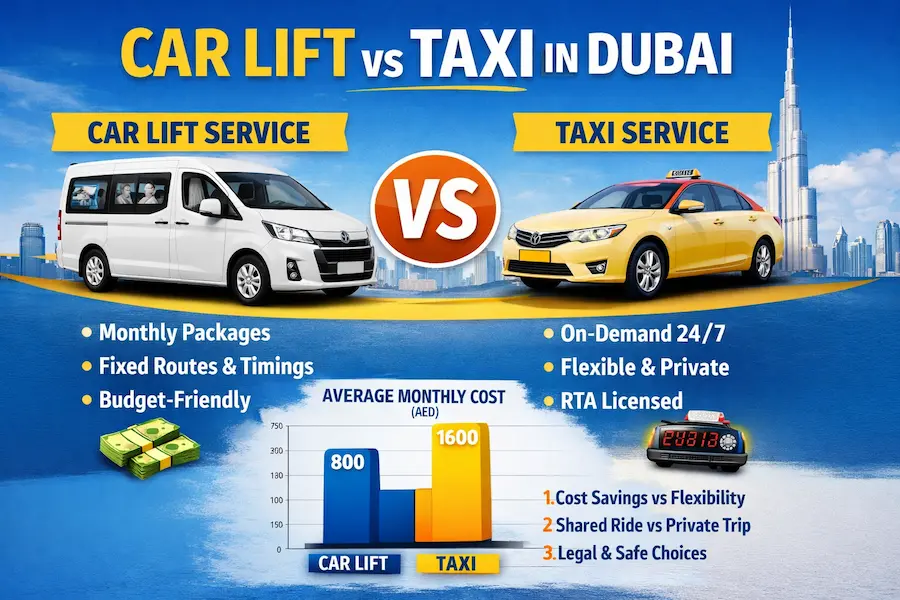
Getting around Dubai can be surprisingly complicated. With long distances between residential areas, business hubs, and tourist attractions, choosing the right transport option quickly becomes an everyday challenge. Many residents, business travelers, and tourists often find themselves debating between two common choices: car lift services or traditional taxis.
At first glance, both options seem convenient. Taxis are widely available and regulated, while car lifts often promise lower costs and flexible pickup arrangements. But the real question is which option actually suits your commute best?
The confusion usually comes down to a few critical concerns:
- Is the service legal in Dubai?
- Which option is more affordable for daily travel?
- What about safety and reliability?
- And which one offers better convenience during peak hours?
Choosing the wrong option can lead to unnecessary expenses, unreliable pickups, or even legal issues in some cases. For daily commuters, this decision can significantly affect both time and monthly transportation costs.
This guide provides a clear, practical comparison between car lift services and taxis in Dubai. We’ll break down how each option works, compare their costs, safety standards, legality, and convenience, and help you determine which transport solution fits your lifestyle, whether you’re commuting to work, traveling for business, or exploring the city as a visitor.
By the end of this guide, you’ll have the clarity needed to choose the most efficient, safe, and cost-effective way to move around Dubai.
What Exactly is a Car Lift Service in Dubai?
Defining Car Lift Services
A car lift service in Dubai generally refers to a shared transportation arrangement where passengers travel together along a predefined route. Unlike taxis, which operate on demand, car lift services are typically organized in advance and cater primarily to people with regular commuting needs.
Operational Model
Car lift services usually operate on a structured and predictable system, making them attractive for people who commute daily.
Key characteristics include:
- Shared rides: Multiple passengers share the same vehicle, reducing the overall travel cost for each rider.
- Fixed routes and schedules: Many services operate along consistent routes such as residential areas to major business districts.
- Subscription or pre-booked travel: Riders often book weekly or monthly arrangements rather than requesting a ride each day.
- Inter-emirate commuting: Car lifts are particularly common for routes like Dubai to Sharjah, Dubai to Ajman, or Dubai to Abu Dhabi, where daily commuters seek more affordable alternatives to taxis.
Because of these structured arrangements, car lifts are frequently used as a daily commuting solution rather than occasional transportation.
Typical User Demographics
Car lift services mainly attract individuals who prioritize predictability and lower commuting costs.
Common users include:
- Daily office commuters looking for a budget-friendly alternative to taxis
- Employees with fixed work schedules who travel the same route every day
- Residents commuting between emirates, especially from Sharjah or Ajman to workplaces in Dubai
- Workers in business hubs like Business Bay, DIFC, or Dubai Marina who prefer scheduled transport
For these users, the main appeal is cost efficiency and routine convenience.
Legal Landscape and Public Perception
While car lift services are widely discussed and sometimes used informally, their legal status in Dubai depends entirely on licensing and regulation.
Dubai’s Roads and Transport Authority (RTA) strictly regulates passenger transport services. This means only licensed operators and approved ride-hailing platforms are legally permitted to provide paid passenger transport.
Because of this, there is an important distinction between:
- Licensed, regulated transport services, and
- Unlicensed informal car lifts, which are not legally authorized.
Unlicensed services can pose several risks, including:
- Lack of insurance coverage for passengers
- No official driver background verification
- Limited accountability if safety issues or disputes occur
- Potential legal penalties for drivers operating illegally
These concerns have shaped the public perception of car lift services in Dubai, where many residents remain cautious about using informal arrangements.
Expert Tip:
Always confirm that any car lift or ride service you consider is officially licensed by the RTA or operates through a recognized platform. Choosing a regulated service ensures legal compliance, passenger safety, and reliable service standards.
Understanding Dubai’s Taxi Services (Including Ride-Hailing Apps)
Dubai has one of the most organized and regulated taxi systems in the world. Managed by the Roads and Transport Authority (RTA), taxis provide a reliable and widely accessible transport option for residents, tourists, and business travelers. In addition to traditional taxis, ride-hailing platforms such as Careem and Uber operate within the city’s official regulatory framework, giving passengers multiple ways to book a ride quickly and safely.
RTA-Regulated Taxis
On-Demand Availability
One of the biggest advantages of Dubai’s taxi network is its easy accessibility. Passengers can find taxis throughout the city without needing to plan far in advance.
Common ways to get a taxi include:
- Street hailing in busy districts, commercial zones, and tourist areas
- Taxi stands located at malls, hotels, airports, metro stations, and business hubs
- Mobile app bookings through official transport apps
- 24/7 availability across most areas of Dubai
Because taxis operate continuously, they are especially useful for airport transfers, late-night travel, or spontaneous trips around the city.
Metered System and Fare Structure
Dubai taxis follow a regulated metered pricing system, ensuring transparency for passengers.
Typical fare components include:
- Base fare: The starting charge when the ride begins
- Per-kilometer rate: Distance-based pricing calculated by the meter
- Waiting charges: Applied when the taxi is stationary in traffic or waiting for the passenger
All fares are set and monitored by the RTA, which helps maintain consistency and prevents price manipulation. Passengers can therefore expect a predictable pricing structure compared to informal transport options.
Recommendation:
For the most reliable experience, book taxis through the official RTA Dubai Smart Taxi app or through Careem, which integrates RTA-licensed taxis such as Hala Taxi. These platforms ensure you receive a licensed vehicle with transparent, meter-based fare calculation.
Ride-Hailing Platforms (Careem & Uber)
Integration with Dubai’s Official Transport System
Ride-hailing services like Careem and Uber operate legally in Dubai by partnering with licensed vehicles and approved transport providers.
For example:
- Careem’s Hala Taxi service connects passengers directly with RTA taxis through the Careem app.
- Uber operates with licensed drivers and vehicles that comply with Dubai’s transport regulations.
This integration means passengers enjoy the convenience of ride-hailing apps while still benefiting from the city’s regulated transport standards.
Booking Convenience and Dynamic Pricing
Ride-hailing apps offer several advantages that appeal to modern commuters and visitors.
Key benefits include:
- Quick in-app booking from anywhere in the city
- Real-time driver tracking and arrival estimates
- Cashless payment options through card or digital wallets
- Ride history and fare transparency within the app
However, users should also be aware of dynamic pricing. During peak hours, major events, or periods of high demand, fares may temporarily increase due to surge pricing.
While this can make rides more expensive at certain times, the trade-off is greater availability during busy periods.
Expert Tip:
Many ride-hailing apps offer shared ride options, such as pooled services within Careem. These allow multiple passengers traveling in a similar direction to share a vehicle, creating a balanced option between the privacy of a taxi and the lower cost of traditional car lift services.
Detailed Side-by-Side Comparison: Car Lift vs. Taxi
Choosing between a car lift service and a taxi in Dubai often depends on several practical factors such as legality, cost, flexibility, and safety. The following comparison breaks down the most important criteria to help you evaluate which option best fits your commuting needs.
| Feature / Criterion | Car Lift Service | Taxi Service |
|---|---|---|
| Legality | Car lift services must be RTA-licensed to operate legally. Many informal operators advertise rides through messaging apps or social media, but these are illegal and carry potential safety and legal risks. | Dubai taxis are fully regulated by the RTA. All drivers are licensed, vehicles are registered, and the service operates under strict government transport regulations. |
| Availability | Typically runs on fixed routes and schedules, often requiring advance booking or monthly arrangements. Because rides are organized ahead of time, availability can be limited if schedules do not match your travel needs. | Taxis offer immediate availability through street hailing, taxi stands, or booking apps. Service operates 24/7 across most areas of Dubai, making it highly accessible. |
| Cost Structure | Usually subscription-based for daily commuters or fixed fares for specific routes (e.g., Dubai–Sharjah commute). Because rides are shared, the cost per passenger is often significantly lower than taxis. | Uses a metered fare system regulated by the RTA. Charges include a base fare, per-kilometer rate, and waiting time. Ride-hailing apps may apply dynamic pricing during peak demand. |
| Flexibility | Low flexibility. Routes, pickup points, and travel times are predetermined. Passengers must adjust to the driver’s schedule and the needs of other riders sharing the vehicle. | Highly flexible. Passengers choose their pickup location, destination, and departure time. Drivers can also adjust routes based on traffic conditions. |
| Privacy & Comfort | Rides are typically shared with other passengers, which reduces privacy. Vehicle comfort may vary depending on the car and the operator’s standards. | Taxis offer a private ride experience, giving passengers more comfort, personal space, and control over the trip. |
| Booking Method | Often arranged through direct contact with drivers, WhatsApp groups, or specialized car lift platforms. Because rides are scheduled, advance planning is usually required. | Multiple booking options including Careem, Uber, the RTA Smart Taxi app, phone bookings, or street hailing, making it easy to arrange transport instantly. |
| Safety & Regulation | Licensed car lift providers must follow RTA rules, but unlicensed operators have no official oversight, driver verification, or insurance guarantees, which increases risk. | Taxis operate under strict RTA monitoring, including driver background checks, vehicle inspections, GPS tracking, and in-app safety features such as ride sharing and emergency assistance. |
| Inter-Emirate Travel | Very common for routes like Dubai–Sharjah or Dubai–Ajman. Because passengers share the cost, car lifts are often much more economical for daily long-distance commuting. | Taxis can travel between emirates, but metered fares make long trips expensive, especially during heavy traffic or peak hours. |
| Payment Options | Payment methods depend on the operator and may include cash, bank transfer, or monthly subscription payments. It is important to confirm payment terms in advance. | Taxis accept cash, credit/debit cards, and in-app digital payments, providing greater convenience and payment security. |
| Suitability | Best suited for daily commuters, budget-conscious workers, and people traveling regularly between emirates with fixed schedules. | Ideal for tourists, occasional travel, urgent trips, airport transfers, and passengers who value flexibility and privacy. |
Key Takeaway
In practice, the difference often comes down to routine versus flexibility.
- Car lift services work well for people who commute on the same route every day and want to reduce monthly transportation costs.
- Taxis and ride-hailing services are better suited for travelers who need instant availability, flexible destinations, and regulated safety standards.
Understanding these differences helps you choose the transport option that aligns best with your budget, schedule, and travel priorities in Dubai.
In-Depth Cost & Affordability Analysis
For many commuters in Dubai, cost is the deciding factor when choosing between a car lift and a taxi. While taxis offer convenience and flexibility, car lift services often appeal to people who travel the same route daily and want to reduce long-term transportation expenses. Understanding how pricing works for each option can help you estimate the true cost of your commute.
Understanding Pricing Structures
Car Lift Pricing
Car lift services usually follow a fixed-price model, especially for regular commuters. Unlike taxis, prices are typically agreed upon in advance rather than calculated during the ride.
Common pricing formats include:
- Per-ride charges: Used for occasional or one-time journeys along a specific route.
- Monthly packages: Many operators offer subscription-based plans, which can significantly reduce costs for daily commuters.
- Shared ride pricing: Because several passengers share the vehicle, the cost per person is usually lower.
Factors that may influence the price include:
- Distance between pickup and drop-off points
- Route complexity and traffic conditions
- Vehicle type and passenger capacity
- Number of riders sharing the journey
For example, someone commuting daily from Sharjah to Dubai may pay a fixed monthly fee instead of paying for each trip individually.
Taxi Pricing (RTA & Ride-Hailing)
Taxi pricing in Dubai is meter-based and regulated by the RTA, ensuring transparency and standardization.
Typical fare components include:
- Base fare: The starting fee when the ride begins
- Per-kilometer charge: Based on the distance traveled
- Waiting time charges: Applied when the vehicle is stationary in traffic or waiting
- Salik (toll) fees: Added when passing through toll gates
Ride-hailing services such as Careem and Uber also follow similar fare structures but may apply dynamic pricing. During periods of high demand—such as rush hour, major events, or bad weather—prices may temporarily increase due to surge pricing.
Expert Tip:
During peak hours, ride-hailing apps often raise fares due to increased demand. In contrast, some car lift services maintain fixed rates, which can make them more economical for commuters traveling during busy times.
Real-World Cost Comparison Scenarios
To better understand the financial difference between these options, it helps to look at practical commuting scenarios. The following examples illustrate typical situations faced by residents in Dubai.
Example A: Short City Commute (5 km, Daily)
| Transport Option | Estimated Cost per Ride | Estimated Monthly Cost (20 workdays) |
|---|---|---|
| Car Lift | AED 10–15 (shared ride estimate) | AED 200–300 |
| Taxi | AED 15–25 depending on traffic | AED 300–500 |
Insight:
For short daily commutes, car lifts may offer moderate savings, though taxis remain convenient for occasional trips.
Example B: Medium Commute (20 km, 5 Days per Week)
| Transport Option | Estimated Cost per Ride | Estimated Monthly Cost |
|---|---|---|
| Car Lift | AED 20–30 | AED 400–600 |
| Taxi | AED 45–65 depending on traffic and time | AED 900–1300 |
Insight:
At medium distances, monthly car lift packages often become significantly cheaper compared to individual taxi rides.
Example C: Inter-Emirate Travel (Dubai to Sharjah)
| Transport Option | Estimated Daily Cost | Estimated Monthly Cost |
|---|---|---|
| Car Lift | AED 20–30 | AED 400–600 |
| Taxi | AED 80–120 depending on traffic and tolls | AED 1600–2400 |
Insight:
For frequent inter-emirate travel, taxis can become four to five times more expensive than shared car lift services.
Methodology Note:
These estimates assume typical weekday commuting patterns and standard traffic conditions. Actual prices may vary depending on traffic levels, route choice, time of day, and service provider.
Expert Tip:
If you commute daily, calculate your total monthly transportation cost instead of focusing on single-ride prices. A monthly car lift subscription often results in substantial savings compared to repeated taxi rides.
Practical Recommendation:
Use navigation tools such as Google Maps or Waze to estimate travel distances and average travel times. This helps you better understand potential taxi fares and compare them with fixed car lift pricing.
Potential Hidden Fees and Considerations
When comparing transport options, it’s important to account for additional charges that may not be immediately obvious.
Car Lift Services
Potential considerations include:
- Unexpected charges if pricing is not clearly agreed upon
- Variations in pricing depending on the number of passengers
- Payment methods limited to cash or bank transfers in some cases
Because pricing structures vary between providers, it is important to confirm the terms before committing to regular rides.
Taxis and Ride-Hailing Services
Taxi fares may include additional fees such as:
- Airport pickup surcharges
- Salik toll fees when crossing toll gates
- Booking charges when using certain apps
- Late-night or premium service charges
These additional costs can increase the final fare, especially for longer trips or airport transfers.
Expert Tip:
When using a car lift service for the first time, always confirm the fare and payment terms before starting the trip. Clear agreement helps prevent misunderstandings and ensures a smooth commuting experience.
Legality, Safety, and RTA Regulations
When choosing between a car lift and a taxi in Dubai, legality and safety should be among your top priorities. Dubai maintains strict transportation regulations to protect passengers, and understanding these rules can help you avoid risks while ensuring a safe commuting experience.
Official RTA Stance on Car Lifts
The Roads and Transport Authority (RTA) regulates all passenger transport services in Dubai. According to official RTA guidelines, any service that charges passengers for transportation must be licensed and authorized.
Licensed vs. Unlicensed Car Lift Services
It is important to understand the difference between legal transport services and informal arrangements.
Licensed Personal Transport Companies
Legitimate car lift providers must:
- Operate under RTA approval or through authorized platforms
- Ensure drivers have valid UAE driving licenses
- Maintain proper commercial insurance coverage
- Conduct vehicle inspections and safety checks
- Follow official passenger transport regulations
These services function similarly to other regulated transport providers and must comply with Dubai’s strict transport policies.
Unlicensed or Informal Car Lift Services
Informal car lifts often appear through:
- Social media groups
- Messaging apps such as WhatsApp
- Classified advertisement platforms
These services typically operate without official authorization, which means:
- No regulatory oversight
- No verified driver background checks
- No guaranteed insurance protection for passengers
Legal Consequences
The RTA and Dubai Police actively monitor illegal passenger transport activities. Drivers operating unlicensed transport services may face:
- Heavy fines
- Vehicle confiscation
- Potential legal penalties depending on the violation
For passengers, using such services can also create complications if an accident or dispute occurs because the service is not legally recognized.
By choosing licensed transport providers, passengers benefit from regulated standards and stronger legal protection.
Safety Protocols and Driver Vetting
Dubai’s transport system places strong emphasis on passenger safety and service accountability. Licensed services must meet several regulatory requirements before operating.
Licensed Car Lift Services
Authorized transport companies must follow strict safety measures, including:
- Driver background verification and licensing checks
- Vehicle inspections to ensure roadworthiness
- Commercial insurance coverage for passengers
- Compliance with official transport regulations
Passengers should always prefer established companies or approved platforms that clearly display licensing information.
RTA Taxis and Ride-Hailing Services
Taxi services and app-based ride-hailing platforms in Dubai operate under direct RTA oversight, which includes rigorous safety standards.
Key safety measures include:
- Professional driver training and certification
- Regular vehicle inspections and maintenance
- GPS tracking and trip monitoring
- Transparent driver and vehicle identification within apps
Ride-hailing apps such as Careem and Uber also provide additional features like:
- Driver profiles with ratings
- Real-time ride tracking
- In-app emergency assistance options
These features significantly enhance passenger safety and accountability.
Expert Tip:
Choose services that provide driver identification, real-time vehicle tracking, and accessible customer support channels. These features add an extra layer of security during your journey.
What Users Need to Know for Their Security
Regardless of the transport option you choose, taking a few precautionary steps can improve your personal safety.
Verify Driver and Vehicle Details
Before entering a vehicle:
- Check that the driver’s name and photo match the app information
- Confirm the vehicle plate number and model
- Ensure the ride details match your booking
This simple verification step can prevent potential issues.
Share Your Trip Details
Many ride-hailing apps allow users to share their trip status with friends or family. This feature lets trusted contacts monitor your journey in real time.
It is especially useful for:
- Late-night travel
- Long-distance rides
- First-time drivers or unfamiliar routes
Know Emergency Procedures
In the unlikely event of a safety concern:
- Use the in-app emergency button if available
- Contact the transport company’s customer support team
- Reach out to Dubai Police or local emergency services
Knowing these options beforehand can provide peace of mind during your commute.
When is a Car Lift Your Best Option? (Ideal Scenarios & User Profiles)
Car lift services are not designed for every type of traveler. However, for certain commuters in Dubai, they can be one of the most practical and cost-effective transport solutions available. Understanding the types of users and commuting patterns that benefit most from car lifts can help you decide whether this option fits your lifestyle.
User Profiles & Commute Patterns
Different commuters have different priorities—some value saving money, while others prioritize flexibility or comfort. Car lift services tend to work best for people whose travel routines are predictable.
The Budget-Conscious Commuter
Many Dubai residents rely on car lifts primarily to reduce daily transport costs.
Typical profile:
- Employees commuting five or six days a week
- Workers living in more affordable residential areas outside Dubai
- Individuals looking to avoid the higher cumulative cost of daily taxi rides
Because car lifts often offer monthly subscription pricing, they can dramatically reduce transportation expenses over time.
The Daily Fixed Route Commuter
Car lifts are especially useful for people whose daily schedule rarely changes.
This includes:
- Office workers traveling between the same residential and business districts
- Students attending the same school or university each day
- Workers with fixed shift schedules
Since car lifts operate on consistent routes and pickup times, they align perfectly with commuters who follow the same routine every day.
The Inter-Emirate Traveler
One of the most common use cases for car lifts in the UAE is inter-emirate commuting.
Many residents live in Sharjah, Ajman, or Abu Dhabi but work in Dubai. Car lifts provide a shared travel option that significantly reduces the cost of these longer trips.
For example:
- Sharjah → Dubai office commute
- Ajman → Dubai industrial zones
- Abu Dhabi → Dubai business districts
Compared to taxis, shared car lift rides can make long-distance commuting far more affordable.
Real-Life Commuter Perspective
Many daily commuters in Dubai choose car lifts simply because they make long-term commuting more manageable.
For instance, a Dubai-based office employee who lives in Sharjah might say:
“I used to take a taxi to work every day, but the monthly cost became too high. Switching to a car lift saved me a large portion of my transport expenses. Now I share the ride with two other commuters who work near my office, and it has made my daily routine much more predictable.”
This kind of arrangement is common among workers who prioritize cost savings and consistent schedules.
Scenarios Where Car Lifts Excel
Car lifts tend to perform best in situations where routine and affordability matter more than flexibility.
Daily Commutes
For individuals commuting every day, car lifts provide a stable and cost-effective solution compared to booking taxis repeatedly.
Because rides are shared, the cost per passenger remains significantly lower, particularly over the course of a full month.
Fixed Schedules
People with predictable work hours often benefit from car lifts because drivers operate set pickup times and routes.
This works well for:
- Office schedules
- School drop-off and pickup routines
- Regular work shifts
Passengers simply join the same ride each day without needing to arrange transportation repeatedly.
Inter-Emirate Travel
For commuters traveling between emirates, taxis can quickly become expensive due to distance-based metered fares and toll charges.
Car lifts are commonly used for routes such as:
- Dubai to Sharjah
- Dubai to Ajman
- Dubai to Abu Dhabi
Because these rides are shared among multiple passengers, they often provide substantial cost savings for long-distance travel.
Community and Networking Opportunities
While not the primary reason people choose car lifts, shared rides sometimes create opportunities for casual social interaction or networking.
Regular passengers often travel together daily, which can create a friendly commuting environment and occasionally lead to professional connections.
The Smart Commuter’s Checklist for Car Lifts
Before committing to a car lift service, it’s helpful to evaluate whether it truly suits your commuting needs.
Ask yourself the following questions:
- Is your daily route consistent and repetitive?
- Are you comfortable sharing rides with other passengers?
- Have you verified that the service operates legally and follows RTA regulations?
- Is the pricing clearly agreed upon before the journey begins?
- Have you checked recent user feedback or reviews about the service?
If most of your answers are yes, a car lift may be a highly practical commuting solution.
When is a Taxi Your Best Option? (Ideal Scenarios & User Profiles)
While car lifts work well for predictable daily commutes, taxis are often the better choice when flexibility, speed, and convenience matter most. Dubai’s taxi network is designed to serve passengers who need instant transportation, private travel, or trips outside fixed schedules.
Understanding the types of users and travel situations where taxis perform best can help you choose the most practical option.
User Profiles & Commute Patterns
Different travelers have different priorities. Taxis are particularly useful for people who need reliable, flexible transportation without advance planning.
The Tourist or Occasional Traveler
Visitors exploring Dubai typically prefer taxis because they offer simple, on-demand transport without complicated arrangements.
Typical needs include:
- Traveling between hotels, malls, and tourist attractions
- Navigating unfamiliar areas of the city
- Avoiding the hassle of coordinating shared transport schedules
Because taxis are widely available across Dubai, tourists can easily move around the city without needing a long-term commuting plan.
The Business Professional
Business travelers and corporate professionals often prioritize punctuality, privacy, and comfort.
Taxis are ideal for situations such as:
- Attending meetings across different parts of the city
- Traveling between offices, hotels, and conference venues
- Making time-sensitive appointments
A private taxi ride allows professionals to focus on work, make phone calls, or prepare for meetings without the distractions of shared transport.
The Family Traveler
Families traveling together often prefer taxis due to the space and convenience they offer.
Benefits include:
- Room for multiple passengers and luggage
- Direct routes to hotels, attractions, or shopping centers
- Less complexity compared to arranging shared transportation
For airport pickups, family outings, or hotel transfers, taxis provide a simple and comfortable travel solution.
The Late-Night Traveler
Car lift services usually operate during specific commuting hours, which can make them impractical late at night.
Taxis, on the other hand, operate 24 hours a day, making them ideal for:
- Late-night flights
- Evening events or dinners
- Early morning travel
For travelers needing reliable transport outside typical commuting times, taxis remain one of the most dependable options in Dubai.
Real-Life Commuter Perspective
Many Dubai residents rely on taxis for situations where time and convenience matter more than cost.
For example, a Dubai-based professional might say:
“I normally drive or use public transport, but when I have an early flight or an urgent meeting across the city, I always take a taxi. It’s quick, reliable, and I don’t have to worry about schedules.”
This reflects how taxis often become the go-to option for urgent or unpredictable travel needs.
Scenarios Where Taxis Excel
Taxis are particularly useful in situations where flexibility and speed are essential.
Immediate Availability
One of the biggest advantages of taxis is instant access to transportation.
You can:
- Hail a taxi on the street
- Book instantly through an app
- Find taxis at malls, hotels, and metro stations
This makes taxis ideal for last-minute travel plans or urgent trips.
Flexibility
Unlike car lifts, taxis allow passengers to choose any destination and travel at any time.
Drivers can also adjust routes based on traffic conditions, helping passengers reach their destination more efficiently.
This flexibility is particularly useful when:
- Visiting multiple locations in one trip
- Running errands across different neighborhoods
- Traveling at irregular hours
Privacy and Comfort
Because taxis provide private rides, they are often preferred for passengers who value personal space.
This can be important for:
- Quiet travel
- Business conversations
- Personal phone calls during the journey
The private environment offers a level of comfort that shared transportation cannot always provide.
Airport Transfers
Taxis are widely used for airport travel in Dubai.
Advantages include:
- Easy handling of luggage
- Direct travel without multiple stops
- Reliable availability at airports and hotels
For travelers arriving or departing from Dubai International Airport (DXB) or Al Maktoum International Airport, taxis provide one of the simplest transport solutions.
Short Trips or Errands
For quick trips across the city—such as visiting a nearby mall, restaurant, or office—taxis provide a fast and convenient solution.
Since the ride is private and direct, passengers can complete short errands efficiently without coordinating with other passengers.
Expert Tip:
When evaluating transport options, consider the value of your time as well as the cost of the ride. In many situations—such as urgent appointments or airport transfers—paying slightly more for a taxi can save significant time and reduce travel stress.
Tips for Finding and Using Reputable Services (for Both Options)
Whether you choose a car lift or a taxi in Dubai, selecting a reputable and reliable service is essential for safety, legality, and overall travel convenience. Doing a bit of research before booking can help you avoid unreliable providers and ensure a smooth commuting experience.
Vetting Licensed Car Lift Providers
Because car lift services can vary widely in quality and legality, it is important to verify that the provider operates within Dubai’s official transport regulations.
Use Official Sources
Start by checking information from the Roads and Transport Authority (RTA).
Recommended resource:
- RTA Official Website and Apps – These platforms provide guidance on transportation regulations, approved services, and safety guidelines for passengers in Dubai.
Using official sources helps you confirm whether a service operates within legal and regulatory frameworks.
Research Service Platforms
If a car lift provider advertises its services online, review the company’s website or official platform carefully.
Look for details such as:
- Service coverage areas and routes
- Pricing structure and subscription options
- Vehicle standards and safety policies
- Contact details and customer support information
Established companies usually provide clear information about their services and licensing.
Read Recent User Reviews
Before choosing a car lift provider, it is helpful to check recent feedback from other commuters.
Useful places to look include:
- Review websites
- Online forums
- Social media discussion groups
Reviews can reveal insights about:
- Punctuality and reliability
- Driver professionalism
- Overall service quality
Expert Tip:
Focus on recent reviews rather than older ones, since service quality and management can change over time.
Check Community Recommendations
Dubai’s expatriate community often shares practical commuting advice through online groups.
Helpful resources include:
- Dubai expat community forums
- Local Facebook groups for residents and commuters
These communities frequently discuss transport options and may provide first-hand experiences with specific car lift providers.
Clarify Payment Methods
Car lift services may use different payment arrangements, especially for subscription-based commuting.
Common payment options include:
- Cash payments
- Bank transfers
- Monthly subscription payments
- App-based payments (if the service operates through a digital platform)
Expert Tip:
Always confirm the exact fare and payment method before starting the journey. Some services may accept only cash or require advance monthly payments.
Best Practices for Official Taxis & Ride-Hailing Apps
Dubai’s taxi system is highly regulated, but following a few simple best practices can still improve your overall experience.
Use Official Booking Channels
To ensure you are using a licensed service, book taxis through trusted platforms such as:
- Careem
- Uber
- Dubai Taxi Corporation (DTC) booking services
These platforms connect passengers with RTA-approved vehicles and professional drivers, ensuring compliance with Dubai’s transport regulations.
Estimate Fares Before the Ride
Most ride-hailing apps provide fare estimates before confirming the trip.
You can also familiarize yourself with RTA taxi fare structures, which generally include:
- Base fare
- Distance-based charges
- Waiting time charges
Checking the estimated fare beforehand helps you avoid surprises and manage your transport budget.
Verify Driver and Vehicle Details
When using a taxi app, always confirm that the driver and vehicle information matches your booking.
Check for:
- Driver name and photo
- Vehicle model and color
- License plate number
These details are displayed in the app and help ensure you enter the correct vehicle.
Use Feedback and Rating Systems
Ride-hailing platforms allow passengers to rate their drivers and provide feedback after each ride.
This system helps maintain service quality by:
- Encouraging professional driver behavior
- Allowing platforms to monitor performance
- Helping future passengers choose reliable drivers
Leaving honest feedback contributes to a better overall transport experience for everyone.
Beyond Cost: The Hidden Value of Each Option
While pricing is often the first factor people consider, the true value of a transport option goes beyond simple fare comparisons. Elements like time efficiency, personal comfort, environmental impact, and even social interaction can significantly influence the overall commuting experience in Dubai.
Understanding these hidden benefits can help you choose the option that best aligns with your daily priorities and lifestyle.
Time Savings and Convenience
Time is one of the most valuable resources for commuters in a fast-paced city like Dubai.
Taxi services offer a major advantage when it comes to immediate availability. Passengers can book a ride instantly, hail a taxi from the street, or request one through an app. This flexibility allows travelers to move quickly without planning ahead.
Car lifts, on the other hand, offer value through predictable scheduling. Once a commuter secures a regular seat, the daily pickup and drop-off routine becomes consistent and reliable.
Both options also provide a significant convenience compared to driving yourself:
- No need to search for parking in busy areas
- Reduced stress from navigating traffic
- Ability to relax or focus on other tasks during the journey
For many people, simply avoiding the stress of driving in heavy traffic adds considerable value to their daily commute.
Comfort, Privacy, and Personal Space
Another important factor is the level of comfort and personal space offered during the ride.
A taxi provides a private travel environment, which can be particularly valuable for:
- Business calls or professional conversations
- Quiet time to prepare for meetings
- Relaxation during long or stressful days
The privacy of a taxi ride can transform travel time into productive or restful personal time.
Car lifts, however, involve shared travel with other passengers. While this may reduce privacy, many commuters are comfortable with the arrangement because it helps lower costs.
Comfort levels in car lifts can vary depending on:
- Vehicle type and condition
- Number of passengers sharing the ride
- Length of the commute
For passengers who prioritize personal space and quiet travel, taxis often provide a more comfortable experience.
Environmental Considerations
Many commuters today are also thinking about the environmental impact of their transportation choices.
Car lifts can contribute to reduced traffic congestion and lower carbon emissions by allowing multiple passengers to share a single vehicle. Instead of several individuals driving separate cars, one vehicle serves several commuters traveling along the same route.
This shared approach can help:
- Decrease the number of vehicles on the road
- Reduce fuel consumption per passenger
- Lower the overall carbon footprint of commuting
At the same time, Dubai’s taxi industry is gradually adopting more environmentally friendly vehicles, including hybrid and electric models within certain fleets.
These developments allow passengers to benefit from regulated transport services while supporting cleaner transportation initiatives.
Networking and Community Opportunities (Car Lifts)
An unexpected benefit of car lifts is the potential for social interaction and networking.
Because many passengers share the same ride every day, commuters often become familiar with one another. Over time, this can create:
- Friendly conversations during the commute
- Informal networking opportunities
- A small sense of community among regular riders
For some commuters, these daily interactions can make long commutes feel more engaging and less monotonous.
The Evolution of Dubai’s Commute: Past, Present, and Future
Dubai’s transportation landscape has transformed dramatically over the past few decades. From modest road networks to a globally recognized smart mobility system, the city continues to innovate in how people move across its rapidly expanding urban environment. Understanding this evolution helps commuters appreciate not only the current options available—such as car lifts and taxis—but also the direction Dubai’s transport future is heading.
Historical Context of Transport in Dubai
In the early stages of Dubai’s development, transportation options were relatively limited. As the city grew into an international business and tourism hub, the government began investing heavily in modern road infrastructure and organized transport systems.
Key milestones in Dubai’s transport development include:
- Expansion of major highways and road networks connecting residential and commercial areas
- Introduction of the Dubai Metro, the first driverless metro system in the region
- Development of regulated taxi services managed by the Roads and Transport Authority (RTA)
- Growth of integrated public transport options including buses, trams, and marine transport
These developments significantly improved mobility and laid the foundation for today’s diverse transport ecosystem.
Current Trends and Innovations
Dubai continues to position itself as a smart mobility leader, adopting innovative technologies and services that make commuting more efficient and convenient.
Some of the most noticeable trends include:
Growth of Ride-Hailing Services
Platforms such as Careem and Uber have reshaped how residents and tourists book rides. These services offer:
- Quick in-app booking
- Digital payment options
- Real-time vehicle tracking
Their integration with RTA taxi fleets has created a hybrid system combining traditional taxi services with modern technology.
Smart City Transport Initiatives
Dubai’s smart city strategy focuses on using technology to improve mobility across the city.
Examples include:
- Smart traffic management systems
- Integrated transport apps that combine multiple travel options
- Digital payment systems across transport networks
These initiatives aim to make commuting more seamless and data-driven.
Expansion of Public Transport
The government continues to expand public transport to reduce congestion and support sustainable mobility.
Recent developments include:
- Extension of Dubai Metro lines
- Expansion of bus networks connecting residential communities
- Improved integration between metro, tram, taxis, and ride-hailing services
Urban transport specialists often emphasize that Dubai’s strategy focuses on multi-modal mobility, allowing residents to combine different transport options based on their needs.
For example, many commuters now use metro for long-distance travel and taxis or ride-hailing for last-mile connectivity.
Future Outlook for Car Lifts and Taxis
Dubai’s transportation sector is expected to continue evolving as technology and urban planning advance.
Some potential developments include:
Autonomous and Smart Mobility
Dubai has already announced plans to increase the adoption of autonomous vehicles and smart mobility solutions. Self-driving taxis and automated transport systems may become part of the city’s mobility network in the future.
Greater Integration Between Services
Future transport systems may integrate public transport, taxis, ride-hailing, and shared mobility platforms into unified digital systems. This would allow passengers to plan, book, and pay for their entire journey through a single platform.
Evolving Regulations
As shared mobility options grow, regulations surrounding services such as car lifts may continue to evolve. Authorities may introduce new frameworks to ensure:
- Passenger safety
- Fair pricing structures
- Compliance with official transport standards
These developments will likely shape how commuters choose between shared transport services and traditional taxis in the years ahead.
Conclusion: Making Your Informed Choice in Dubai
Choosing between a car lift and a taxi in Dubai ultimately depends on your travel priorities. Each option offers distinct advantages depending on how often you travel, your budget, and your need for flexibility or privacy.
Key Takeaways from the Comparison
Car Lift Services
Advantages:
- Often more affordable for daily commuters
- Ideal for fixed routes and regular schedules
- Popular for inter-emirate commuting
Limitations:
- Limited flexibility
- Shared travel environment
- Requires careful verification of licensing and reliability
Taxi Services
Advantages:
- On-demand availability 24/7
- High level of regulation and passenger safety
- Greater privacy and flexibility
Limitations:
- Higher costs for frequent or long-distance travel
- Possible surge pricing during peak demand
Decision-Making Framework
Different commuters will naturally gravitate toward different options depending on their lifestyle and travel needs.
The Budget-Conscious Commuter
Car lifts may be the best option for reducing long-term commuting costs.
The Tourist or Occasional Traveler
Taxis provide convenience and flexibility when exploring the city.
The Daily Fixed Route Commuter
Car lifts work well for predictable routines and consistent travel routes.
The Business Professional
Taxis offer privacy, reliability, and time efficiency for meetings and appointments.
The Hybrid Commuter
Some residents use a combination of options, relying on car lifts for daily work commutes and taxis for occasional trips or urgent travel.
Quick Self-Assessment: Which Commute Is Right for You?
Consider the following questions:
- Do you commute the same route every day?
- Is cost reduction your top priority?
- Do you prefer flexible travel times and private rides?
- Do you need instant transport without planning ahead?
If you prioritize cost and routine, a car lift may suit you best.
If you value flexibility, speed, and privacy, a taxi is likely the better option.
Final Recommendation
Dubai offers a wide range of transport solutions designed to meet the needs of residents, tourists, and business travelers alike. By evaluating factors such as cost, convenience, safety, and flexibility, you can confidently select the commuting option that best fits your lifestyle.
Whether you prefer the cost efficiency of car lifts or the convenience of taxis, understanding the strengths of each option ensures a smoother and more efficient commuting experience in Dubai.
If you have personal experiences with either option, consider sharing them with other commuters. Real-world insights can help others navigate Dubai’s evolving transport landscape more effectively.
Note:
Dubai’s transport regulations, pricing structures, and service availability can change over time. Information in this guide should be reviewed periodically to reflect updates in the city’s dynamic transportation sector, ensuring accuracy and relevance for future readers.